
Explore Police Officer Education Options
Learn about police education options and find out what police officer jobs may be available to you.
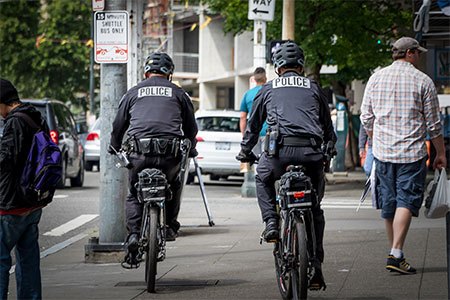
Police officer education can help prepare you for work as one of your city’s dedicated law enforcement agents.
You’ll maintain law and order, collect evidence, and conduct criminal investigations. You might be patrolling a neighborhood to keep residents safe, responding to a call for help, or participating in a SWAT team raid.
If you’ve ever thought of becoming a police officer, you’ll want to know what your police education will prepare you for:
- Urban police officers have general law enforcement duties including maintaining regular patrols and responding to calls for help. Many are assigned to patrol a specific area, such as a business district or residential neighborhood.
- Sheriffs and deputy sheriffs enforce the law on the county level. Sheriffs, who are elected to their posts, perform duties similar to those of a local or county police chief.
- Detectives gather facts and collect evidence for criminal cases. They conduct interviews, examine records, observe the activities of suspects, and participate in raids or arrests.
- State police officers, also known as highway patrol officers, arrest criminals statewide and patrol highways to enforce motor vehicle laws and regulations. At the scene of accidents, they may direct traffic, give first aid, or call for emergency equipment.
Police Officer Education Prerequisites
To become a police officer, you’ll need these education prerequisites:
- Be a U.S. citizen over 20 years old
- Not be a convicted felon
- Have earned a high school diploma or a GED
- Must pass several competitive written and physical examinations
- If you’re thinking of working at the state or federal level, you’ll need a college degree.
Additional Police Officer Education
Once you’re accepted by a law enforcement agency, you’ll receive 12 to 14 weeks of instruction in a police academy. Police education coursework includes these programs:
- Classroom instruction in constitutional law and civil rights
- State laws and local ordinances
- Accident investigation
- Training in patrol
- Traffic control
- Firearms usage
- Self-defense
- First aid
- Emergency response
Continuing education is also required for police officers and detectives. Many agencies pay all or part of the tuition for officers to earn a degree in criminal justice, justice administration, or public administration, and pay higher salaries to those who earn such degrees. Online degrees allow those working as police officers already the flexibility needed, and the education is considered just as good as traditional classroom education.
Police Officer Salaries
According to the U.S. Bureau of Labor Statistics’ 2023 Occupational Employment Statistics, the median national annual salary for police and sheriffs is $72,280. Actual law enforcement salaries may vary greatly based on specialization within the field, location, years of experience, and a variety of other factors.
Possible Police Officer Career Paths
In a large department, police officers may be promoted to detective or to a specialty area of police work, such as juvenile justice administration.
Promotions to corporal, sergeant, lieutenant, and captain are usually made according to a candidate’s position on a promotion list, depending on your on-the-job performance and examination scores. Many officers retire with a pension after only 20 or 25 years of service, and pursue a second career while still in their 40s.