Related Forensics Articles
Forensics Overview
Forensic Science Career Guide
Interview with a Forensic Scientist
Forensic Pathology at “The Body Farm”
Forensic Photography Career and Education Guide
Becoming a Forensic Scientist in Texas
Becoming a Forensic Scientist in Florida
Which is More Reliable: DNA or Fingerprinting?
Find the Forensic Science Degree to Fit Your Needs
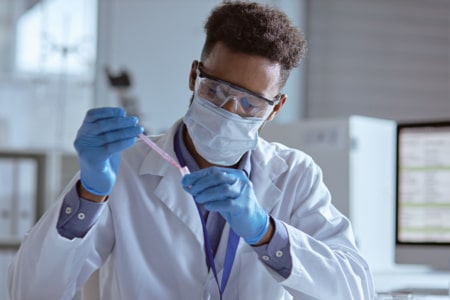
Building a career in forensic science requires the courage to dive into a constantly expanding pool of research and practice. You will need a solid educational foundation to be competitive in this exciting interdisciplinary field. Forensic science degree programs integrate science, law, and technology with a focus on practical skills for laboratory analysis and criminal investigation.
If you’re eager to get started, you can find a job as a forensic technician with just an associate’s degree. You’ll get an even stronger start with a bachelor’s degree. However, the best jobs demand specialized skills that you learn by pursuing a forensic science master’s degree, medical degree, or other post-graduate degrees.
Associate Degrees
A forensic science degree at the associate level typically takes two years to complete. You will learn the following in this type of degree program:
- The basics of analyzing and evaluating physical evidence
- An overview of forensic laboratory technology
- Crime scene analysis
- Fingerprint technology
- Document analysis
- Examination procedures
- Introduction to forensic medicine, forensic dentistry, anthropology, psychology, and pathology
A forensic science degree at this level will qualify you for entry-level jobs in forensic laboratories. After you finish your associate’s degree program, you will also be able to transfer to a bachelor’s degree at another college or university.
Bachelor’s Degrees
In a 4-year forensic science degree program, you will gain a more complete understanding of the evidentiary process in criminal investigation and prosecution. Although some bachelor’s level programs allow you to specialize in a particular area of forensic science, most offer a more in-depth version of the content addressed in associate’s degrees in forensic science. Areas of study include:
- Physical sciences, including biology, chemistry, and physics
- Criminal justice processes
- Criminal investigation methods
- Criminal psychology
- Laboratory skills and techniques
- Applicable law and regulations
- Ethics and professional standards
A forensic science degree at this level will qualify you to work as a criminal investigator or forensic science specialist. With a bachelor’s degree, you can find jobs in forensic laboratories, police departments, government agencies, hospitals, and medical examiner’s or coroner’s offices.
Master’s Degrees and Doctoral Degrees
At the master’s level and beyond, forensic science degree programs become more specialized. Here are some of the specialties you can pursue with a forensic science master’s degree:
- Crime scene investigation
- Forensic chemistry
- Forensic toxicology
- Computer forensics
- The science of forensic DNA
- Forensic microscopy and trace analysis
- Forensic molecular biology
- Forensic psychology
If you have particular goals for your forensic science career, a specific type of graduate degree may be required:
- Forensic anthropologist: requires a doctorate (PhD)
- Forensic dentist: requires a doctor of dental surgery degree (DDS)
- Forensic pathologist or medical examiner: requires a medical degree (MD)
- Forensic psychologist: many positions require a PhD or PsyD in clinical psychology, as well as post-graduate training in forensic psychology
Licensing and Certification
Once you complete your forensic science education, you’re not required to become licensed in order to work. However, certification from a professional agency can showcase your ability in the field and give you a leg up against other job candidates.
There are a number of forensic specialty boards offering certification:
- The American Board of Criminalistics
- The American Board of Forensic Entomology
- The American Board of Forensic Document Examiners
- The American Board of Forensic Toxicology
- The National Registry in Clinical Chemistry (certifies forensic toxicologists)
- The American Board of Medicolegal Death Investigators (ABMDI), which confers the title of Registered Medicolegal Death Investigator