
How Do You Teach Criminal Justice Degree Programs Online? Learn about online criminal justice degrees from an online criminal justice professor.
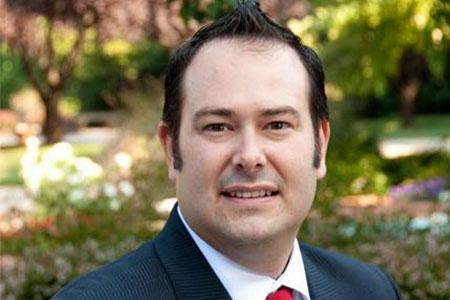
Paul R. Rickert, M.S., M.C.J., Ed.S.
Assistant Professor of Criminal Justice
Helms School of Government, Liberty U
Lynchburg, Virginia
Liberty U is one of the largest Christian universities in the world. Liberty U is proud of its Christian foundation, but they understand and respect that some students do not hold the same faith. They strive to hold all students to rigorous academic standards. Liberty U is your top choice for an accredited online criminal justice degree with a Christian focus.
We spoke with online criminal justice professor Paul Rickert of the Helms School of Government. This is what he had to say about online criminal justice degrees at Liberty U.
What criminal justice degrees do you offer?
Liberty U offers criminal justice degrees at the associate’s, bachelor’s, and master’s levels. Our online degree programs seek to give foundational academic courses in the field. These typically include what are often called the “three C’s”: cops, courts, and corrections. But our criminal justice degree also requires an introductory course on the historical concepts of constitutional government and free enterprise, as well as one on American government.
We also offer advanced courses in criminal law, investigations, constitutional criminal procedure, and a course on the history and impact of terrorism in the modern world. Our online criminal justice degree is designed this way to meet the needs of the broadest group of criminal justice students, from those interested in social work and law, to those interested in policing and investigations.
Perhaps most notably, we have a course in research and writing that seeks to increase proficiency of our student in these crucial performance areas.
How do you define criminal justice?
Criminal justice is largely a political process carried out by government authorities in an attempt to do two things: first, to bring a resolution to a conflict, which typically involves the infringement of another person’s life, liberty, or property. Second, it serves as a barrier to what a given society deems inappropriate behavior.
Here at Liberty U we couch this in terms of political, positive, and natural law. Principles of natural justice are viewed as patterns of God’s justice. We seek to develop laws and policies that reflect biblical principles of natural justice, as we believe that natural principles of justice will be more effective in the real world than man-made ones.
What kind of students are in your program?
Some of the students entering the criminal justice degree simply want to increase their chances at being hired as police officers. Others are seeking to complete this degree program as part of a broader liberal arts degree while they concentrate on another area with a legal or social science perspective.
Still others seek to supplement other multidisciplinary degrees. Many students like the criminal justice degree program at Liberty U because it allows for integration of our courses into other areas of study, such as government, psychology, or sociology.
How can students maximize their online experience?
The best way for students to maximize their online studies is to actively participate in their courses and the assignments.
We have many students already working in the field who are seeking to advance their careers, and others who are just beginning their criminal justice degrees and hope to get into the field. We like to team up more experienced students with those new to criminal justice in mentor/mentee relationships. In this way, the less experienced students learn more and may have an easier time finding a job after they graduate. I’ve had many chiefs and deputy chiefs working on completing their criminal justice degrees. You never know where active and thoughtful engagement in forums may lead, and we like to tap into that great resource.
At a large facility, how do you make programs more personal?
One of things that we try to encourage in our criminal justice degrees is strong student engagement in discussion forums. This is not just for the discussion of ideas and theories, but most classes also have a personally oriented forum for encouragement, prayer requests, and other personal engagement.
We also strive to get our students out of the virtual classroom with assignments that require interviews, court visitation, and the like. To understand the field of criminal justice, students must actually see it in action, rather than simply discussing abstract ideas.
We often have police officers, correctional officers and others who’ve worked in the system participate in our online classes, and their experiences add to our academic discussions and understanding of the criminal justice system.
What are the most common fields for graduates?
While I don’t have specific data on this, from the online criminal justice classes that I teach, most student seem to want to go into policing, with juvenile justice, and probation or parole as strong seconds. Several students also want to continue on to law school.