
By: Anna Giorgi

Updated: January 8, 2026

Related Articles
How to Become a Digital Forensics Technician
Fingerprinting or DNA?
How to Become a Homicide Detective
Forensic Anthropology: What is a “Body Farm?”
Forensic Psychology Careers and Degrees
How to Become a Forensic Fingerprint Expert
Guide to Becoming a Forensics Handwriting Expert
What is a Property and Evidence Custodian?
By: Anna Giorgi
Updated: January 8, 2026

Do you enjoy solving puzzles? Do you have an interest in and aptitude for computer software, systems and other digital products? If you want to work at the forefront of cybersecurity investigating computer-based crimes, a career as a digital forensics analyst may be right for you.
A digital forensics analyst specializes in collecting, analyzing, retrieving and preserving electronic documentation to be used as evidence in computer-based crimes. They may also assess weaknesses and restore security following a data breach, hack or theft of digital information.
In this article
You should consider becoming a digital forensics analyst if you think you would enjoy applying scientific methods to detect computer-based crimes. “People drawn to digital forensics typically love technology, problem-solving and investigation. They’re curious about computers, networks and mobile devices, with a knack for uncovering hidden data and tracking cyberattacks. Analytical minds thrive in this field, where attention to detail and patience are key, as forensic work often involves long hours of sorting through complex evidence,” says Tino Kyprianou, CCE, CFE, CEO of the International Society of Forensic Computer Examiners (ISFCE).
While a digital forensics analyst may spend much of their time working alone to evaluate evidence and write reports, they also work with professionals in the law enforcement and criminal justice systems to analyze, explain and present evidence in legal proceedings. In the private sector, this job can also involve working with clients or their IT staff.
“Prospective students considering a career as a digital forensic analyst should know that the field offers a unique blend of technology, law and investigation, making it ideal for those who enjoy solving puzzles and staying at the forefront of cybersecurity developments. It’s a career that requires both technical expertise and ethical responsibility, as the work often involves handling sensitive information and ensuring that evidence is legally admissible,” says Kyprianou.
“Prospective students considering a career as a digital forensic analyst should know that the field offers a unique blend of technology, law and investigation, making it ideal for those who enjoy solving puzzles and staying at the forefront of cybersecurity developments.”
With the right combination of education, technical skills and curiosity, you can pursue a wide range of opportunities in this growing and dynamic field. “The demand for digital forensic professionals is growing, especially in areas like cybercrime, cloud forensics and incident response, offering strong job prospects and the potential for career advancement. However, it’s important to be prepared for the challenges, including long hours, the need for ongoing education and occasionally dealing with emotionally difficult cases. Overall, it’s a rewarding field for those with a passion for technology and justice,” said Kyprianou.
If you think becoming a digital forensics analyst is the right career for you, follow these steps to get started:
Consider your career path.

A digital forensics analyst uses digital scientific methods to identify crimes. These crimes can involve unethical computer hacking, data breaches, fraud and identity theft. In working to find and document crimes, a digital forensics analyst can also become involved in preserving and presenting
computer-related evidence in legal proceedings. In the aftermath of a cybercrime, a digital forensics analyst may also work to identify network vulnerabilities and propose solutions to increase security.
Digital forensics differs from the broader field of cybersecurity since cybersecurity aligns more with the proactive approach of protecting and
safeguarding systems, networks and other forms of digital information against security risks. Within the field of digital forensics, you can specialize as an analyst or other another role such as an engineer, investigator, cryptographer or technician.
“Analysts respond to incidents such as hacking or data breaches to trace the source of the attack, determine the extent of the compromise and identify the perpetrators. They prepare detailed forensic reports and may serve as expert witnesses in court, ensuring that all findings are legally admissible by following proper evidence-handling procedures,” said Kyprianou.
Complete a bachelor’s degree in digital forensics or a related field.

A bachelor’s degree in digital forensics, computer science, cybersecurity, information technology or a related field is required for most
entry-level jobs as a digital forensics analyst. Depending on your school’s
programs, you may be able to earn a digital forensics specialization within a forensics science degree.
While your position may involve vendor-specific computer programs, a bachelor’s degree can provide the foundational knowledge and experience in computer systems, networking and forensic investigation techniques you need to work with a wide range of systems and assignments.
“For students aiming to become digital forensic analysts, programs that mix theory with hands-on experience are key. Degrees in digital forensics, cybersecurity or computer science cover essential topics like forensic techniques, operating systems, networking and data analysis. Some programs also include courses on cyber law, ethics and evidence handling,” said Kyprianou.
As a student in an undergraduate digital forensics program, your coursework may include the following types of courses:
• Introduction to Digital Forensics
• Criminal Justice Ethics
• Investigating Online Crimes
• Financial Crimes and Investigations
• Introduction to Computer Science in Python
• Introduction to Computer Science in Java
• Systems Programming
• Investigations of Malicious Attacks
Your required courses can vary by program. Some programs offer
the opportunity to pursue electives to complement your required studies or focus on an area of specialization. “Learning about criminal justice or law
helps analysts understand legal processes, evidence handling and how to testify in court. Cybersecurity, cryptography and networking are critical for
understanding how to trace cyberattacks and secure data. Knowledge of
programming and scripting languages (such as Python) is valuable for automating forensic tasks and analyzing malicious code,” said Kyprianou.
Get on-the-job experience.
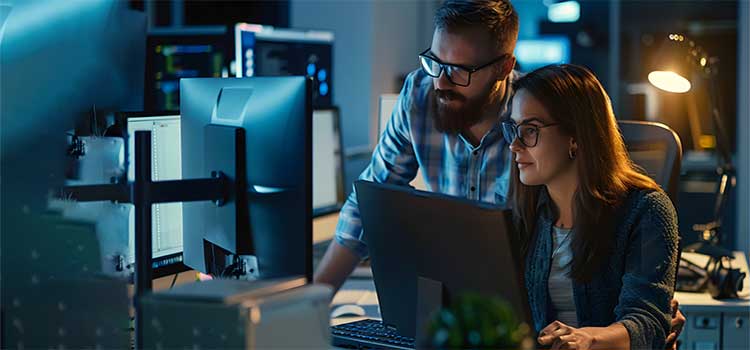
On-the-job experience is key to understanding how your knowledge of digital forensics theory applies to the wide range of everyday situations in the workplace. Depending on your educational program, you may be able to gain experience through a practicum or internship. These placements can give you a chance to test your skills and determine the types of environments where you would like to work.
“Internships or practicum placements are incredibly valuable, giving students a chance to work with professionals in law enforcement, private forensics or corporate IT. Research in areas like malware analysis or cryptography can deepen problem-solving skills, and participating in cybersecurity competitions helps sharpen technical abilities while building a network. These experiences provide real-world exposure and set students up for success in the field,” said Kyprianou.
While an advanced degree isn’t always required to work as a digital forensics analyst, it can offer the opportunity to participate in digital forensics research and opportunities for more advanced work experiences. “Some analysts pursue advanced degrees, such as a master’s in digital forensics or cybersecurity, to deepen their expertise or qualify for higher-level roles,” said Kyprianou.
Begin your career as a digital forensics analyst.

With a college education and practical experience, you’ll be ready to start your career as a digital forensics analyst. Working in this position does not require passing a national examination or state licensure.
Your career opportunities will vary based on your interests, location and credentials. “Digital forensic analysts work in a variety of settings, including law enforcement agencies, government organizations, private cybersecurity firms and corporate IT departments. They are often employed by legal teams to assist in criminal investigations, fraud cases or civil litigation. In the private sector, analysts are increasingly in demand for handling internal investigations, data breaches and cybersecurity incidents. Financial institutions, healthcare organizations and consulting firms also hire forensic analysts to protect sensitive data and ensure regulatory compliance,” said Kyprianou.
You can grow your professional network and discover new career opportunities by joining a professional organization that aligns with your interests. Many of these organizations allow students and early-career digital forensics analysts to join as associate members until they gain professional experience. Some organizations also offer the chance to earn continuing education credits and qualify for professional certifications, which can help boost your professional credibility.
Salary data for digital forensics analysts are not reported by the U.S. Bureau of Labor Statistics (BLS). However, the BLS category of information security analyst includes salary data for professionals who work as digital forensics analysts.
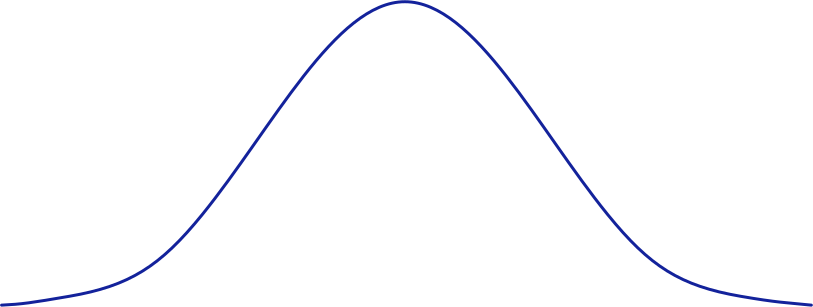

10%$75,090
25%$97,810
50%$129,180Median
75%$163,500
90%$199,850
Median Hourly Wage$62
Job growth21%
Total Employment190,650
| State | Median Salary | Bottom 10% | Top 10% |
|---|---|---|---|
| Alabama | $122,730 | $66,090 | $170,690 |
| Alaska | $114,990 | $75,770 | $149,270 |
| Arizona | $125,260 | $78,330 | $176,390 |
| Arkansas | $103,490 | $59,410 | $140,900 |
| California | $138,570 | $66,070 | $221,000 |
| Colorado | $135,220 | $87,560 | $208,650 |
| Connecticut | $130,570 | $79,780 | $175,590 |
| Delaware | $137,030 | $82,500 | $184,990 |
| District of Columbia | $135,090 | $86,280 | $189,510 |
| Florida | $124,860 | $75,410 | $174,600 |
| Georgia | $128,970 | $77,060 | $178,650 |
| Hawaii | $126,250 | $76,390 | $172,780 |
| Idaho | N/A | N/A | N/A |
| Illinois | $124,180 | $78,760 | $172,830 |
| Indiana | $101,420 | $60,450 | $163,370 |
| Iowa | $119,710 | $71,550 | $169,620 |
| Kansas | $100,620 | $63,730 | $155,490 |
| Kentucky | $103,630 | $64,650 | $157,810 |
| Louisiana | $92,990 | $66,660 | $139,190 |
| Maine | $101,730 | $63,210 | $181,020 |
| Maryland | $139,640 | $79,130 | $216,570 |
| Massachusetts | $136,550 | $85,790 | $226,190 |
| Michigan | $106,230 | $64,150 | $165,730 |
| Minnesota | $130,710 | $83,140 | $169,750 |
| Mississippi | $87,690 | $51,170 | $138,900 |
| Missouri | $103,440 | $60,700 | $161,430 |
| Montana | $81,950 | $57,000 | $158,220 |
| Nebraska | $92,550 | $66,630 | $147,150 |
| Nevada | $106,200 | $57,160 | $178,990 |
| New Hampshire | $124,000 | $61,940 | $187,820 |
| New Jersey | $134,820 | $86,860 | $204,220 |
| New Mexico | $130,070 | $99,100 | $199,990 |
| New York | $134,660 | $83,110 | $216,220 |
| North Carolina | $131,540 | $77,150 | $173,670 |
| North Dakota | $107,540 | $69,480 | $139,360 |
| Ohio | $110,480 | $68,070 | $171,450 |
| Oklahoma | $94,000 | $56,050 | $158,320 |
| Oregon | N/A | N/A | N/A |
| Pennsylvania | $117,770 | $67,840 | $170,870 |
| Rhode Island | $109,420 | $74,880 | $170,180 |
| South Carolina | $105,800 | $66,410 | $166,530 |
| South Dakota | $116,640 | $71,610 | $161,700 |
| Tennessee | $115,430 | $63,870 | $250,590 |
| Texas | $129,890 | $77,990 | $178,550 |
| Utah | $99,690 | $48,630 | $168,830 |
| Vermont | $109,750 | $74,840 | $179,130 |
| Virginia | $134,900 | $81,410 | $205,750 |
| Washington | $154,940 | $96,730 | $211,720 |
| Wisconsin | $101,550 | $62,110 | $162,260 |
| Wyoming | $98,710 | $75,580 | $198,230 |
Source: U.S. Bureau of Labor Statistics (BLS) 2025 median salary; projected job growth through 2035. Actual salaries vary depending on location, level of education, years of experience, work environment, and other factors. Salaries may differ even more for those who are self-employed or work part time.
Digital forensics analysts employed by local, state and federal government organizations often work in positions where salaries vary based on their expertise and levels of administrative responsibilities. An undergraduate degree is usually required for entry-level positions. Having an advanced degree may give you an advantage when seeking higher-level jobs with more responsibilities or supervisory duties.
As a digital forensics analyst, you can also choose to work in the private sector as a consultant or an employee of a larger consulting firm. Depending on your experience and expertise, you may be able to increase your earnings based on your area of specialization and the types of clients you pursue. Since state licensure is not required and many issues can be handled without an onsite visit, you won’t be limited to a local client base.
You can boost your credentials by earning one of many professional certifications applicable to the general field of digital forensics or an area of specialization. Several professional organizations offer “vendor-neutral” certifications that apply to the general field of digital forensic investigations without an emphasis on a specific product or service. You can also earn “vendor-specific” certifications that indicate a level of proficiency in the use of certain types of software or other digital products.
“Earning these certifications can often lead to higher salary prospects and more advanced positions, as they showcase specialized skills and commitment to continuous learning in the field,” said Kyprianou.
Depending on your interests, professional goals, and the requirements of your job, you may benefit from one of the following professional certifications:
Vendor-neutral certifications:
Vendor-specific certifications:
The U.S. job outlook for information security analysts indicates that the industry is positioned for growth. According to the BLS, there is a projected growth rate of 21% for information security analysts and other computer-based specialists in this category through 2035. This is more than three times the average projected growth rate for all U.S. occupations during that time.
Opportunities for all types of digital forensics analysts are set to increase in response to major industry growth and the growing use of computers to commit crimes. According to the National Institute of Justice, the use of digital evidence in the prosecution of all types of crimes is increasing. While digital evidence was once limited to the prosecution of e-crimes such as child pornography or credit card fraud, evidence from suspects’ emails, mobile phones and social media accounts often contain key details about their location, intent and relationships, which may be relevant to a crime. The BLS cited the following metro areas as the top 10 in the U.S. for employment of information security analysts:
States with the highest level of employment of information security analysts (digital forensics analysts):
A digital forensics analyst investigates and analyzes evidence related to digital incidents involving cybercrimes. While their work involves the diligent analysis of electronic data, it also requires collaboration and communication with law enforcement agencies, legal teams and a wide range of technical and non-technical professionals impacted by a specific incident.
“People are drawn to digital forensics because of the investigative challenge and the opportunity to uncover hidden truths through technology. It’s rewarding to solve complex problems, such as tracing cyberattacks or recovering crucial digital evidence, often playing a key role in solving crimes or preventing data breaches. The field’s impact is significant, as analysts contribute to justice, corporate security and the protection of sensitive information,” said Kyprianou. “Additionally, the fast-evolving nature of technology and cyber threats keeps the work intellectually stimulating, requiring continuous learning and adaptation, which many find both exciting and fulfilling.”
The specific job duties that you perform can vary based on your employer and the type of digital issue being investigated. Your work as a digital forensics analyst may involve the following responsibilities, said Kyprianou:
As a digital forensic analyst, you have the chance to uncover hidden evidence and solve mysteries. Your work has the potential to impact the lives of people immediately involved in a case as well as those whose information may be affected. However, given the nature of the job, the work can be stressful and intense.
“Working as a digital forensic analyst can be challenging due to the often time-consuming and meticulous nature of the work, requiring long hours of detailed analysis to recover and interpret digital evidence. Analysts may also face high-pressure situations, especially when dealing with incidence response, criminal investigations or legal deadlines, where time is critical. The rapid pace of technological change requires constant learning and adaptation, which can be overwhelming,” said Kyprianou. “Additionally, handling sensitive or disturbing material during investigations can be emotionally taxing, and maintaining strict adherence to legal protocols is essential to avoid jeopardizing evidence, adding further pressure to the role.”
The day-to-day routine of a digital forensics analyst can vary based on the type of case they’re handling and their area of specialization. Entry-level positions require hands-on analysis, reporting and making recommendations. “Advanced positions may involve coordinating, supervising and training less experienced digital forensics analysts,” said Kyprianou.
The typical day-to-day routine of a digital forensics analyst can include the following tasks:
Clients seek the services of a digital forensics analyst for a variety of reasons. Clients can include detectives and other investigators from law enforcement agencies, lawyers, private investigators or others who have an interest in digital evidence related to a specific case. In civil or private matters, a client may seek the services of a digital forensics analyst to determine the source and extent of a known cybercrime and identify the system vulnerabilities that caused it.
From a client’s perspective, the ideal digital forensics analyst has broad knowledge and expertise in a wide range of systems, programs and devices. Clients also require ethical hackers who are credible and trustworthy to handle sensitive and confidential information. It is not uncommon to have to pass a background check to qualify for a job or private contract in this field.
Working as a digital forensics analyst requires keeping up with a wide range of constantly evolving digital tools and technology. “Their role requires deep technical expertise in digital systems, as well as a solid understanding of legal protocols and the ethical standards involved in handling digital evidence,” said Kyprianou.
They also need a combination of personal and technical skills that include:
The specific tools and technology you use will depend on your employer, position and the type of work you do. Some common tools and technology used by a digital forensics analyst include:
Digital forensic analysts work in many types of traditional and novel settings. “Emerging areas for digital forensic analysts include cloud forensics, as more businesses move their operations to cloud-based services, and the analysis of Internet of Things (IoT) devices, which are becoming common in smart homes and workplaces. Forensic roles in cryptocurrency and blockchain investigations are also growing, driven by the rise of digital currencies and related fraud. Additionally, analysts are finding opportunities in e-discovery, where they help manage and analyze large volumes of digital data in legal cases. These emerging fields offer exciting, high-demand roles for prospective students to consider,” said Kyprianou.
Digital forensics analysts can work under a few different job titles that involve comparable responsibilities. Since job titles can vary by organization, industry and area of specialty, it’s important to clarify what each position involves, regardless of its title, during the interview process.
Job titles that align with a digital forensics analyst include:
A digital forensics analyst can also work as an expert witness providing testimony in court cases. The expertise of a digital forensics analyst can be valuable in both civil and criminal cases.
Digital forensic analysts work in a variety of public and private settings. These work environments include:
While specific requirements may vary by employer, you’ll need the minimum of a bachelor’s degree to compete for most entry-level positions as a digital forensics analyst jobs. Though a master’s degree isn’t always required, it can be invaluable when seeking positions with supervisory, administrative or managerial responsibilities. Internships, practicum placements and research can enhance your knowledge and help you earn in-demand skills and work experience to better compete for entry-level roles.
Professional certifications that demonstrate you’ve proven your knowledge in an area of specialization can enhance your credibility. “While there are no universal licensure requirements for digital forensic analysts, earning certifications can significantly enhance career prospects and demonstrate expertise in the field. Several certifications are widely recognized and valued by employers,” said Kyprianou.
Joining a local, regional or national professional organization can help you connect with digital forensics analysts in a wide range of industries and gain access to career resources that can be valuable at every stage of your career. As a member, you’ll have a chance to learn about different careers and emerging research in the field. While benefits vary by organization, most groups provide member perks that include continuing education, mentorship/career planning support, job search resources and meetings/conventions that can foster a professional community and keep you informed about industry news.
American Academy of Forensic Science (AAFS): This multidisciplinary organization provides leadership to advance science and its application to the legal system. Members include digital evidence experts, pathologists, attorneys and others involved in many other aspects of forensic science. The AAFS also has a Forensic Digital and Multimedia Sciences section.
International Society of Forensic Computer Examiners (ISFCE): This organization works to professionalize and further the science of digital forensics, administers certification for forensic computer examiners and works to build a community of like-minded professionals.
International Association of Computer Investigative Specialists (IACIS): The IACIS is dedicated to training, certifying and providing membership services to computer forensic professionals worldwide. Members include federal, state, and municipal law enforcement professionals along with professional computer forensic practitioners.
Association of Cyber Forensics and Threat Investigators (ACFTI): This organization focuses on the academics and practitioners of cybersecurity, digital forensics, incident response and threat investigations and their influence on society. The ACFTI promotes research and education in the profession.
While every position is different, background checks are often required to qualify for digital forensics analysts because the job typically involves your access to confidential and sensitive information. Some professional certifications also require passing a background check as part of their criteria.
While requirements vary by employer and position, a minimum of a bachelor’s degree is required for most digital forensics analysts. However, having an associate degree and/or related work experience in the field of forensics or criminal justice may help you qualify for a position as a digital forensics technician or another role in this field.
Virtually every electronic-based transaction or communication involves some aspect of digital security, creating a need for digital forensics analysts and related specialists in almost every industry. The knowledge and skills you gain preparing for a career in digital forensics are transferable across many positions and industries.