
By: Megan Marshall
Updated: March 18, 2026
What is criminal profiling, and how do you become a profiler?
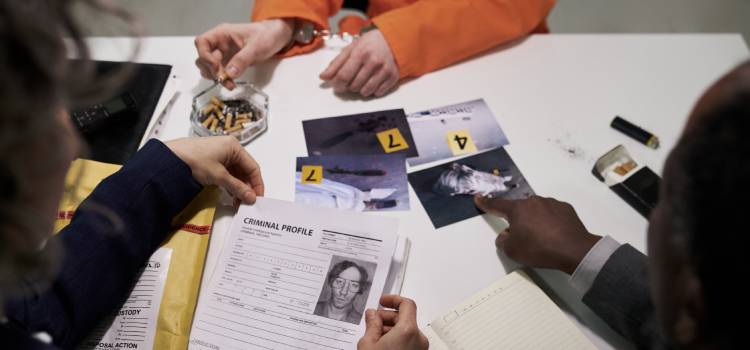
Most people meet criminal profilers through shows like Criminal Minds, captivated by the race-against-the-clock drama and a profiler who “just knows” the truth. It’s gripping television, but it doesn’t necessarily reflect the real job.
Criminal profilers rely on a blend of psychology, investigative experience and behavioral analysis to help law enforcement understand complex patterns in human behavior. It’s a niche specialty with limited roles across federal, state and local agencies.
But if you’re fascinated by human behavior and the way evidence tells a story, understanding the reality of the work is the first step toward deciding whether this career path fits your long-term goals.
Key takeaways
- Criminal profilers use principles of psychology and behavioral science to analyze crime patterns and help investigators narrow down potential suspects.
- Entering the field typically involves earning a degree in criminal justice, psychology or a related area, followed by gaining substantial investigative or law enforcement experience.
- Strong critical thinking, communication and analytical skills are essential for interpreting behavioral evidence and contributing effectively to criminal investigations.
In this Article
What is criminal profiling?
At its core, criminal profiling is a structured investigative technique that uses behavioral clues to infer the characteristics of an unknown offender. It sits squarely at the intersection of psychology and law enforcement, drawing on behavioral science and forensic analysis to help narrow suspects and guide investigative strategy.
Early examples of profiling date back to late-1800s attempts to analyze the motives and personality of Jack the Ripper. Profiling took a significant leap forward in the 1970s, when the FBI’s Behavioral Science Unit began systematically interviewing violent offenders and developing early frameworks for understanding criminal behavior.
Even with decades of progress, profiling persists as a tension between disciplines. It relies on research and evidence, yet it also requires intuition shaped by years of investigative work. “In some ways, [profiling] is really still as much an art as a science,” says Harvey Schlossberg, PhD, former director of psychological services for the New York Police Department.
What do criminal profilers do?
In practice, criminal profilers are part of a larger investigative ecosystem. They support detectives, analysts and specialized units rather than solving cases in isolation. Their job is to help make sense of behavior. They step in when patterns are unclear, motives are complex or when violence repeatedly occurs across victims, locations or jurisdictions.
In the FBI, profilers mostly work in Behavioral Analysis Units. “Experts in the Behavioral Analysis Units work a variety of cases across the country, including terrorism, cybercrime and violent crimes against children and adults… Their work includes criminal investigative analysis, interview strategy, investigative strategy and threat assessments,” the FBI explains. A typical consultation might involve reviewing crime-scene details, evaluating offender behavior, linking similar cases, recommending interview approaches or helping agencies assess whether a person poses a credible threat.
Profilers also break down how offenders act before, during and after a crime to reveal deeper behavioral signatures. “Profilers provide behavioral-based operational support to agencies investigating unusual and/or repetitive violent crimes, communicated threats or matters of interest to law enforcement and fire service,” the Bureau of Alcohol, Tobacco, Firearms and Explosives (ATF) says. Their analysis often includes reconstructing an offender’s decision-making through “an examination, evaluation and interpretation of all the suspect’s actions and interactions with the victim before, during and after the criminal act.”
Beyond direct casework, profilers may also advise on media strategy, support multi-agency coordination and provide expert testimony in court when their behavioral assessments help clarify patterns or motivations.
How criminal profilers analyze behavior patterns
“The basic premise [of profiling] is that behavior reflects personality,” Schlossberg says. Profilers study what an offender does (and how they do it) to infer traits that can guide an investigation. They analyze multiple layers of information, such as:
- Crime-scene behavior: These details reveal how the offender approached the scene, whether they planned or improvised and what level of organization or staging they displayed.
- Victimology: This analysis explains why the offender chose the victim, what risk factors were involved and whether a relationship, if any, existed between the victim and the offender.
- Geography: Geographical patterns reveal where the crimes occurred, how locations are connected and whether the offender operates within a familiar “comfort zone.”
- Sequence of events: A timeline clarifies how the offender planned the crime, approached the victim, exerted control and ultimately escaped the scene.
- Pre- and post-offense behaviors: These actions indicate how the offender prepared for the crime, how they reacted afterward and whether communication, fantasy or ritual played a role in their behavior.
Historically, the FBI’s organized/disorganized framework shaped early profiling. It mainly relied on expert intuition. Later research revealed this framework’s limitations and pushed the discipline toward more empirical standards.
Now, profiling favors structured, transparent approaches like the CRIME framework, which emphasizes:
- Crime scene evaluation
- Relevance of research
- Investigative opinions
- Methods of investigation
- Evaluation and verification
The CRIME method blends induction, deduction and abductive reasoning rather than relying solely on intuition.
Where criminal profilers work
At the federal level, most aspiring profilers strive to work for the FBI’s Behavioral Analysis Units or the National Center for the Analysis of Violent Crime, a data-processing and behavioral science center created to help agencies navigate unusual, bizarre or repetitive violent crime.
The ATF also employs profilers, particularly for arson, explosives, serial bombings and other complex violent crimes. “ATF’s profilers serve as technical experts in their fields, and regularly share their research, techniques and intelligence reports with partner agencies,” the ATF says. Other federal entities, such as the Department of Homeland Security and specialized military units, may also employ professionals trained in behavioral analysis.
At the state and local levels, major crimes units and threat assessment teams lean on behavioral insights to link cases, prevent violence and advise investigations.
Profilers may also work in academia. Criminologists study crime trends, forensic psychologists examine offender behavior and interdisciplinary researchers refine profiling frameworks. It’s also where partnerships with agencies help integrate science into practice because, “there is an incredible value added when applications of professional psychology enter into the mix of what we do,” Schlossberg says.
The skills and traits effective profilers need to have
Criminal profilers rely on a distinct mix of abilities drawn from investigative experience and behavioral science expertise. Here are the top skills and traits that consistently define strong profilers:
- Critical thinking and pattern recognition: These skills allow profilers to identify behavioral consistencies and interpret evidence logically.
- Analytical rigor: Profilers must examine large volumes of data and extract meaningful patterns.
- Emotional detachment and objectivity: Profilers must stay objective and emotionally grounded when reviewing disturbing or repetitive material.
- Strong written and verbal communication: Reports, briefings and courtroom testimony must be precise and credible.
- Attention to detail: Effective profilers connect small clues into a coherent behavioral picture, which requires close attention to detail.
- Active listening and social perception: These skills are vital when interviewing subjects or collaborating across agencies.
- Physical stamina and resilience: Field profilers may work long hours, travel frequently and face emotionally taxing cases.
The pathway to becoming a criminal profiler
The path to criminal profiling isn’t typically linear or fast. Profiling is a niche role, and agencies overwhelmingly select professionals who have already proven themselves as detectives, analysts or federal agents.
That said, most aspiring profilers begin by finishing high school and exploring early-exposure opportunities like police cadet programs, community volunteering or ROTC-style leadership development.
Higher education for criminal profilers
From there, the next step is pursuing higher education. Many students interested in profiling choose to earn a bachelor’s degree in psychology, criminal justice, forensic science, criminology or a related field. Some people may also choose to enter a graduate program to strengthen their expertise and open doors to advanced roles.
After college, the typical route leads through law enforcement academy training, followed by work in patrol, investigations or specialized units where real-world experience in the criminal justice field grows. Profilers are usually seasoned investigators with seven to 15+ years of experience in complex or violent crime roles before they’re even eligible for federal behavioral programs.
Other education opportunities
Ongoing professional learning is critical. Some programs that support various phases of a profiler’s career might include:
- The FBI Academy in Quantico, Virginia, offers an invitation-only, 16-week program in which selected law enforcement leaders receive advanced instruction in law, forensic science, communication strategies, behavioral science and physical preparedness.
- The ATF’s profiling program is a 13-week course for experienced special agents. The program prepares profilers for complex arson and bombing cases. Participants must also complete the FBI Behavioral Analysis Unit’s certification process.
- The International Criminal Investigative Analysis Fellowship (ICIAF) is an elite program open to law enforcement professionals worldwide and is divided into two tracks: criminal investigative analysis and geographic profiling.
- The Certified Criminal Profiler (CCP) credential is an advanced, online professional certification designed to develop high-level skills in criminal profiling, including victimology, racial profiling, informant handling, interviewing, and interrogation techniques.
- The Profiling General Knowledge Exam (PGKE) is an advanced, comprehensive test that fulfills the International Association of Forensic Criminologists (IAFC)’s certification requirements and assesses expertise in forensic science, victimology, crime scene analysis and criminal profiling.
There is no single guaranteed pipeline to becoming a criminal profiler. Still, agencies consistently look for strong education, field-tested judgment, exceptional performance, communication skills and physical readiness, all of which the FBI’s selection process emphasizes.
Final thoughts
Criminal profiling sits in that rare space where psychology, investigative experience and evidence-based reasoning meet. It’s an ongoing blend of “art and science” shaped by research and collaboration. It’s also not an entry-level job. Most profilers spend years working cases, learning patterns and developing the judgment needed for specialized behavioral work.
If you’re drawn to human behavior, complex problems and the challenge of making sense of chaotic scenes, a career as a profiler may be a great fit. Start with education, gain real-world experience and stay engaged with the developing science that underpins the field of criminal profiling.