

By: Kendall Upton

Updated: January 14, 2026
Restorative justice in action: Real-world examples
This is part two of a two-part series of blog posts on restorative justice. Read part one.
The concept of restorative justice reaches for some lofty ideals, but what does a restorative justice approach to crime actually look like when it’s applied in the real world? And how is restorative justice being implemented within our criminal justice system and schools today?
Let’s explore some restorative justice examples and how they play out in different settings.
In this Article
An overview of restorative justice
Restorative justice is a unique approach to crime which emphasizes that crime is a violation of people, not laws.
“The definition that we use is that this is a relational approach to conflict,” said Nicholas Bradford, founder of the National Center for Restorative Justice.
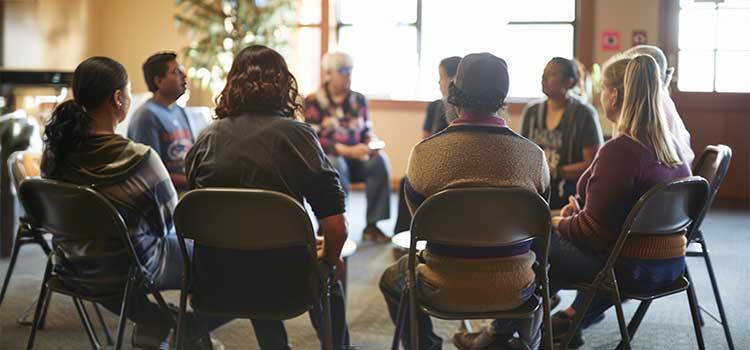
Restorative justice pays close attention three distinct groups within the justice system: victims, authors (offenders) and community members. By bringing these groups together to confront and discuss whatever crime happened, restorative justice seeks to promote healing for victims and accountability for offenders.
“Victims get voice and agency, they get to tell their story, they get some kind of closure. And they might actually have some of their own desires be met,” Bradford said.
Not only must offenders listen to how their actions affected others, they are also invited to come up with ways that they can repair the harm caused by their actions. Community members may also be included in this process by helping offenders get the help they need and come up with ways to prevent this crime from happening again.
The idea is that by starting with restorative practices first, incarceration and other serious punishments may be avoided entirely while still holding offenders accountable.
Restorative justice: Rewriting the narrative
So, how might this actually work? Bradford, who has worked in the restorative justice field for over a decade, shared an example that occurred in Seattle several years ago. Two young boys were stealing from a convenience store owned and operated by a Vietnamese family and were eventually caught. The store owner and her son in college got the opportunity to sit down with these boys and explain how the theft was affecting them. The store is their livelihood, they explained, and it’s how they put their son through college. These thefts, though seemingly insignificant, were hurting their business.
Something clicked for the boys—they hadn’t really considered before that their actions might harm another family. The store owners decided that they wanted the boys to volunteer at a local refugee resettlement center as part of their community service. As a family that were once refugees themselves after the Vietnam war, the wanted to give back to the social services that had helped them in their time of need.
What did this accomplish?
Restorative justice in adult corrections
Restorative justice practices are not typically built into our existing criminal justice system, so much of the restorative justice work that exists today is facilitated by nonprofit organizations.
Though the execution can vary, the central idea remains fairly consistent: Bring victims and offenders together, often with a counselor or some other mediator, to talk about what happened. Victims get the chance to tell the offender how they were hurt by what they did. Offenders get the opportunity to apologize. Both get to come up with ways that the offender can make amends.
The challenge with accountability
The problem with this idea in our prevailing criminal justice system is that offenders aren’t incentivized to own up to what happened and take responsibility for their actions. When you admit guilt, you get put behind bars.
In April 2025, the Minnesota Senate recently passed a bill to address this issue. This new legislation would make it so that information obtained from restorative justice conferences would be inadmissible in court, the same way courts can’t access information shared with therapists or religious leaders.
“Restorative justice practices create a space where people who are navigating the aftermath of a crime can engage with honesty and vulnerability. This will particularly help survivors of sexual violence, who are often failed by the legal system and whose only hope of closure comes through restorative practices. By protecting data from restorative practices and removing the fear that an apology may result in a legal charge, this bill helps perpetrators to take accountability and give victims what they’re not currently receiving from the legal system: validation,” said Senator Sandy Pappas (DFL) in a statement.
Addressing offenders’ needs
Restorative justice, especially in adult settings, can also put a spotlight on some of the challenges that may have led to whatever crime took place.
“So because we’re engaging in relational work, we’re also identifying gaps in the resources that offenders have, whether it’s education, mental health support, drug addiction, homelessness,” Bradford said.
Indeed, by slowing the process down and listening to offenders’ stories, it’s an opportunity to consider and address some of the issues that may be contributing to their behavior. While these issues do not excuse whatever crime was committed, the reality is that it’s going to be difficult to spur real change in an individual if their circumstances remain the same.
“Because if somebody’s homeless and they’re stealing, and if we give them six months and they’re still homeless after that, they’re going to steal something again. Restorative justice is not magic—you have to have the social services, you have to have therapy and such, but when you have real engagement from adult community members with offenders, you’re less likely to have that reoffending habit.”
Restorative justice in youth settings
A restorative justice approach can be particularly effective with young people for whom severe punishment—be it suspensions, expulsions or even incarceration—may actually worsen their behavior.
Bradford’s organization focuses on providing restorative justice support specifically to schools. Their work begins with two-to-three-day training sessions in various cities, and they can bring their training curriculum to schools elsewhere, too.
Following a training session that introduces the idea of restorative justice and what it looks like, they ask the schools that are participating what it is they’re looking for. Does their administration need help reducing suspensions and expulsions? Do they need more classroom level assistance in implementing accountability circles? Or maybe all of the above? Whatever they need to make restorative justice a reality in their school, the Center is there to help.
“The rates of recidivism—the frequency of reoffending—are drastically reduced,” Bradford said. “In schools we can see a 50 to 80% reduction in suspensions.”
Making a passive experience active
Punishment is a passive experience. A kid does something wrong, and adults tell them what they’re going to do to make things right.
“When you think about all the punitive systems, even in the home—timeouts, spankings, go to your room, give me your phone—those are all passive experiences where [the author] can then say, ‘The police don’t like me. My teacher’s a jerk. My principal doesn’t like me. The judge has it out for me. I didn’t do anything wrong. They got me in trouble.‘”
That’s a real problem with the punitive system, Bradford said, whereas a restorative system is an active, participatory process.
“I ask kids once we go through this whole process and they take accountability, and I say, hey, what happens now? Now that we’ve had this conversation, how do we make things better? The kids will look at me totally confused. And so I turn this worksheet around to them and say, ‘Let me know when you think of something that might be helpful for you to do in order to make amends.’”
Shifting self-perception
Another one of Bradford’s goals when working with youth populations is to help them transform their self-image into something more positive to try to break the cycle of bad behavior. All too often people identify others—and themselves—by the worst thing that they’ve done. But even when people do terrible things, that does not have to define who they are forever.
“I have to, as a school, really offer this young person opportunities to do work that’s positive. That way I can say, ‘Yes, you did that terrible thing. But you also did this good thing. And you did that good thing, and you did this other good thing here too!’” Bradford said. “I think that people who are older and in the adult systems don’t have those opportunities. They can really fixate and get looped in the system, and then they’re self-identifying, saying, ‘I’m a criminal, I’m a dirt bag.’ And then they never see the positive light of their own self.”
More examples in the news
To get a sense for how it takes shape in the real world, take a look at some of these other restorative justice examples:
Talking circles to reduce suspensions:
In 2023, many public schools in New Mexico, especially those with a high concentration of Native American students, began implementing restorative justice practices like group talking circles as a response to student conflicts. As a result, many schools experienced a marked decrease in student expulsions and long term suspensions.
Minnesota man opts for restorative justice over jail time:
A Minnesota couple was accidentally hit by a car in 2019. Although the husband made a full recovery, his wife’s injuries ultimately caused her to die several weeks later. He was given the choice to press charges against the driver—younger than 21 years old at the time—or pursue a restorative justice route. Feeling that “wrecking another life” would accomplish nothing to bring his wife back, he declined to press charges. What ensued instead was a series of mediated encounters where the victim could share his feelings, and the driver had the chance to apologize without having to go to prison.
Programs in Portland, Oregon:
Portland’s Multnomah County started a restorative justice program in 2022 known as Restorative Roots. It’s a partnership among prosecutors, public defenders and a local nonprofit, The Insight Alliance, who provides counseling and face-to-face meetings for victims and offenders. The way it works is prosecutors can choose to refer victims of low-level violent crimes to The Insight Alliance. If a victim agrees, prosecutors don’t file an indictment. If the defendant completes the program, the indictment is dropped, but if they don’t, then charges are reinstated.
Restorative justice in Australia:
A news story from 2022 discussed the availability of restorative justice programs in Australia and some of the crime victims who have utilized them, including a woman whose husband was killed in a robbery and another woman whose daughter was killed in a driving accident. Both women spoke with the person responsible for the death of their loved ones, and thought the experience was incredibly cathartic. Victims and offenders were able to find new depths of closure when allowed the opportunity to speak face-to-face and tell their stories.
Closing thoughts
Restorative justice is a unique approach to crime that can offer numerous benefits for individuals and society at large. When implemented correctly in both adult and juvenile settings, the results can be transformational. If you’re interested in pursuing a criminal justice career with a focus on restorative justice, hit our Find Schools button to explore criminal justice programs today.