By: Mariah Beckman
Updated: January 7, 2026

By: Mariah Beckman
Updated: January 7, 2026
As a 911 dispatcher, you’ll field emergency services calls from people who urgently need help.

When the unthinkable happens, victims, survivors and witnesses know they can turn to emergency services for help. All they have to do is dial those three magic numbers they’ve memorized since grade school.
9-1-1, what is the nature of your emergency?
You call it when you’re in a car crash. Or when your parent is having chest pains and seems to have trouble breathing. Or if you’re home alone and hear a window shatter downstairs. When you do, a calm voice answers the call, and this stranger on the other end of the line is a critical link between those in need and the help they desperately require.
Help is on the way.
These unsung heroes of emergency services field calls from people who urgently need help. By gathering crucial information and dispatching life-saving assistance, they provide a lifeline to those in need and those who can render aid.
If you’re a person who thrives under pressure, possesses exceptional communication skills and wants to make a positive impact in your community, then becoming a 911 dispatcher might be the perfect fit for you. But don’t mistake this role for a walk in the park—this is a high-stress position that isn’t right for everyone—and you will find there is plenty of competition among candidates.
If you think you’re ready to answer the call, discover how you can become a 911 dispatcher.
In this article
Understanding the role of a 911 dispatcher also means understanding what this role isn’t. News stories can sometimes highlight situations where communication breakdowns occur between dispatchers and callers in emergencies. These isolated incidents can paint a negative picture of the profession.
Similarly, portrayal of this job can sometimes sensationalize the position. There are instances where TV shows and movies can glamorize the role of 911 dispatchers. The truth, however, is that working as a 911 dispatcher is rarely the following:
And 911 dispatchers are not:
911 Dispatchers are like air traffic controllers, guiding emergency responders to the scene quickly and efficiently, potentially saving lives.
The major duties that 911 dispatchers handle on a daily basis may include:
Not all dispatcher roles are the same. In some cities or departments, the role of 911 dispatcher is separate and distinct from the role of the 911 call taker. Call takers can go by several names, such as Communication Support Officer or Telecommunicator. This model has a few advantages. For instance, call-takers and dispatchers can focus on their specific roles, improving efficiency and expertise.
It also helps distribute the workload. Calls can be routed to multiple call centers, preventing overload and ensuring prompt response. Also, separating these two roles gives each emergency two sets of eyes before it reaches a first responder—this can reduce mistakes and shorten the time between the call being placed and the time it takes emergency services to arrive on the scene.
Overall, the separation of call-taking and dispatching allows for a more efficient and coordinated response to emergencies, ensuring that help is sent quickly and effectively to those in need.
In a typical 911 system with separate call-taking and dispatch functions, the process works as follows:
Call intake:
When a 911 call is made, it is routed to the nearest Public Safety Answering Point (PSAP), also known as a 911 call center.
Trained call-takers answer the call, gather essential information (location, nature of emergency, etc.) and assess the situation.
They use specific protocols to determine the type and priority of the emergency and which response agencies (police, fire, medical) are needed.
Information transfer:
The call-taker enters the information into a Computer-Aided Dispatch (CAD) system, which creates a digital record of the incident.
The CAD system alerts the appropriate dispatch center responsible for coordinating the response.
Dispatch:
Dispatchers receive the information from the CAD system and use their expertise to assign available units to the incident.
They communicate with responders via radio or other communication systems, providing updates and additional information as needed.
Dispatchers also monitor response progress and coordinate with other agencies if necessary.
Response and resolution:
The dispatched units arrive at the scene and address the emergency.
Throughout the incident, dispatchers maintain communication with responders, providing support and coordinating resources as needed.
Once the situation is resolved, the dispatcher marks the incident as closed in the CAD system.
The qualifications and training requirements to become a 911 dispatcher can vary depending on the specific agency or location. The best resource for you is your county’s emergency services department.
However, there are some minimum requirements that you can find in almost any city or county. These include:
The hiring process for this position is long. Generally, it takes anywhere from four to eight weeks on the shorter end to several months on the longer end.
Agency size and hiring needs play a part in the timeline. Larger agencies with higher turnover may have a faster hiring process compared to smaller ones. The number of applicants also affects the timeline. A large pool of applicants can naturally slow down the process as each candidate needs to be thoroughly evaluated.
Background investigations, including criminal history checks and reference checks, can take a significant amount of time as well. Some agencies require polygraph tests, psychological evaluations or physical fitness tests, which can further extend the timeline.
If you’re interested in a specific agency, it’s best to check their website or contact them directly to inquire about their typical hiring timeline. It’s also important to be patient and persistent throughout the process, as becoming a 911 dispatcher is a rewarding career that requires dedication and commitment.
New hires undergo comprehensive training programs that cover emergency procedures, dispatch protocols, CPR and basic first aid, communication techniques and local geography. This training can last weeks or months.
Training for 911 dispatchers is comprehensive and covers a wide range of essential skills and knowledge:
Depending on the agency, dispatchers may receive additional training in areas such as:
After completing initial training, new dispatchers are often paired with experienced mentors for on-the-job training and support. This allows them to apply their knowledge in real-world scenarios and gain confidence in their abilities.
The training process for 911 dispatchers is rigorous but essential to ensure they can handle the demands of the job and provide vital assistance to those in need. The requirements and duration vary by state and locality. Some states mandate 40+ hours of training or require ongoing education, while others leave training decisions to individual agencies.
Training programs typically involve both classroom instruction and practical demonstrations, followed by a probationary period. Topics covered include local geography, agency protocols, standard procedures and equipment usage. Dispatchers may also receive specialized training for high-risk incidents like child abductions and suicidal callers.
While some agencies have in-house training, others rely on programs from external organizations like the Association of Public-Safety Communications Officials (APCO), National Emergency Number Association (NENA) and International Academies of Emergency Dispatch (IAED), which often serve as guidelines for developing effective training programs.
Earning professional certifications or earning a degree may enhance your career and help you advance or specialize. Some of the credentials and degrees available to 911 dispatchers include:
Emergency Medical Dispatch (EMD) certification: While not mandatory for most positions, pursuing Emergency Medical Dispatch (EMD) certification demonstrates advanced knowledge in providing pre-arrival medical instructions.
Associate degree in criminal justice or communications: An associate degree is not required to work as a 911 dispatcher, but it may enhance your candidacy and career prospects in the long run.
National Emergency Number Association’s Emergency Number Professional (ENP) certification: ENP certification is a tool to establish the benchmarks of performance that will signify a broad-based competence in the professional field.
APCO’s Registered Public-Safety Leader (RPL) certification: APCO International’s Registered Public-Safety Leader (RPL) Program is designed for individuals interested in developing a solid foundation of management and supervisory skills.
911 dispatchers are the cornerstone of emergency response systems. Their work environment is fast-paced and demanding.
The work environment for a 911 dispatcher or call taker is fast-paced, high-pressure and often emotionally demanding.
Dispatchers and call takers handle a continuous stream of incoming calls, often dealing with multiple emergencies simultaneously. The nature of the calls can be very stressful, involving accidents, crimes, medical emergencies and other traumatic events. Dealing with distressed callers and sometimes hearing traumatic events can take an emotional toll on dispatchers and call takers.
Dispatchers typically work in a call center environment with limited space and often shared workstations. The job relies heavily on technology, including computer-aided dispatch systems, radio communication and mapping software.
Dispatch centers operate 24/7, requiring dispatchers to work nights, weekends and holidays in rotating shifts, sometimes lasting 12 hours or longer. They work closely with other dispatchers, law enforcement, firefighters and EMS personnel, coordinating responses and providing support.
The work environment for a 911 dispatcher or call taker can be demanding, but it is also rewarding for those who are passionate about helping others and thrive in a fast-paced, high-pressure environment. It is a career that requires strong communication, problem-solving and decision-making skills, as well as the ability to remain calm under pressure.
You’ll find dispatchers working at:
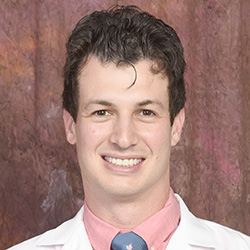
Dr. Jared Ross is a rare specimen. When he isn’t practicing in-hospital emergency medicine, delivering emergency medical services or providing care in a tactical medical setting, he’s teaching others how to do the same. He has held many positions in his life that serve others in times of crisis—including a stint as a 911 dispatcher that inspired him to go on and earn his medical degree.
“I initially got involved as a 911 call taker and dispatcher filling in for my college’s campus police dispatchers during their breaks,” Dr. Ross explained. “This led to opportunities to work busier shifts as a second call taker and dispatcher on campus. This led me to work briefly as a call taker and dispatcher at one of our county 911 call centers.”
“During my time as a call taker and dispatcher,” said Dr. Ross, “I learned how challenging it is to obtain reliable information from members of the public during a time of crisis. As a first responder, it is easy to get frustrated and jaded by what seems like a constant disconnect between the call dispatch information and what is actually occurring on-scene.
“Unfortunately, that’s just the limitation of getting information from someone who is in crisis. This has taught me to be a better listener and communicator, especially with people dealing with the emotions surrounding a medical emergency.”
Dr. Ross added that the communication skills he learned as a 911 call taker and dispatcher, including working with limited information, have gone on to serve him well in law enforcement and EMS. “I frequently deal with second or even third hand information, and am in situations where I am only able to gather information from what I can hear, not what I can see.”
As with any job, there are highs and lows for a 911 dispatcher. Some of the most common pros and cons are as follows:
When asked, Dr. Ross was candid about what he found most challenging about 911 dispatcher work.
“Emergency management services is often described as ‘hours of boredom occasionally interrupted by minutes of sheer terror.’ However, I found 911 call-taking and dispatching to be more constricting.
“During that time of boredom, I couldn’t wander around or physically exert myself. I had to remain at my desk next to the phone and radio. When there was a true emergency, I felt frustrated by my limited ability to help in the moment, and a strong desire to jump into an emergency vehicle and race to the scene.”
Dr. Ross continued, saying, “Nine-one-one call takers and dispatchers perform a critical service for our communities, but unlike most other jobs in the emergency sector, it is truly a ‘desk job.'”
“Of course, you must be calm under pressure, but unlike in the field, you must be able to juggle multiple tasks simultaneously, especially at smaller agencies where you might be the only person, both answering phone calls and dispatching units at the same time.”
“You also have to be the type of person that is satisfied with directing and coordinating activities that you are not directly participating in. I found that with my ‘do-er’ mentality, I was not well suited to the job.”
To determine if a 911 dispatcher career is a good fit for you, consider asking yourself these questions:
If you answered “yes” to a majority of these questions, this career might be for you.`
Take the first step by researching local call centers and public safety answering points in your area. Take note of the minimum requirements in the job description, and reach out to the agencies you’re interested in if you have questions. Then you can begin researching your education and training options.
Dr. Ross suggested you go a step further. “Schedule a ‘ride-along’ with your local dispatch agency to make sure it’s a good fit for you,” he advised. “Then get certified as a 911, emergency operator and an emergency medical dispatcher. Some agencies will train you on one or both of these, but you will be more competitive for a position coming in with training.”