
By: All Criminal Justice Schools Staff
Updated: January 2, 2026

By: All Criminal Justice Schools Staff
Updated: January 2, 2026
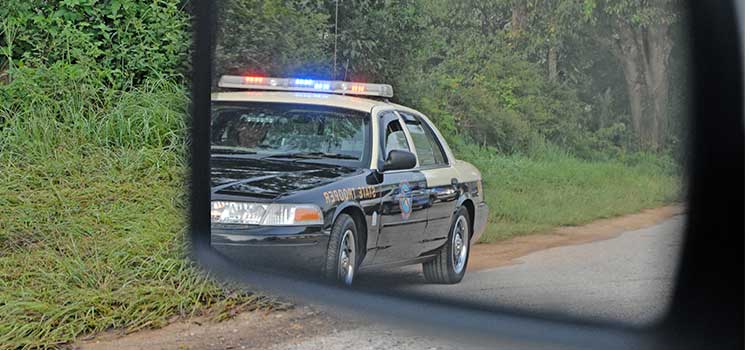
According to the U.S. Bureau of Labor Statistics (BLS), Pennsylvania is the sixth largest state employer of police and sheriff’s patrol officers in the U.S., with some 24,280 officers working in the combined forces. The Pennsylvania State Police (PSP) is the agency where state troopers work, but not a separate entity overseeing them—it is the organization state troopers are a part of. The Commissioner of the Pennsylvania State Police oversees the entire PSP, including all state troopers.
Some of the reasons Pennsylvania may rank so highly for police employment, including state troopers, are:
Coverage:
Pennsylvania’s unique approach allows municipalities to rely on the Pennsylvania State Police (PSP) for local law enforcement without incurring additional costs. As a result, approximately 1,287 municipalities depend solely on the PSP, including state troopers, for policing services. This extensive responsibility necessitates a larger number of state troopers to effectively cover these areas.
Large state size and population:
With a population of 13 million and a diverse mix of urban and rural areas, Pennsylvania requires a substantial law enforcement presence to address varying needs across the state. The trooper’s role in patrolling vast rural regions, especially where local police departments may be absent, contributes to the higher employment figures.
Institutional factors:
Established in 1905, the PSP was created to provide a professional and centralized law enforcement body, replacing the fragmented private police forces of the time. This long-standing institution has evolved to become one of the largest accredited law enforcement agencies globally, with a comprehensive structure that includes various specialized bureaus and divisions.
Here are the education and training steps you’ll need to take in order to join state troopers in Pennsylvania.
In this article
To become a state trooper with the Pennsylvania State Police, applicants must meet specific eligibility criteria and successfully complete a multi-step selection process.
While the basic eligibility requirements are the minimum needed to apply, there are preferred qualifications that can make an applicant more competitive for a Pennsylvania State Trooper position.
Here are some preferred or advantageous qualifications:
To be eligible for appointment to the PSP training academy, applicants must pass a Physical Readiness Test (PRT) consisting of the following components:
The specific standards vary based on age and gender. Applicants must pass all three events to be admitted to the academy.
While the Pennsylvania State Police (PSP) no longer require applicants to have 60 college credits, possessing certain educational backgrounds may still enhance a candidate’s competitiveness:
Additionally, the PSP has partnered with Commonwealth University to offer college credits to cadets upon completion of the training academy. These credits can be applied toward an associate or bachelor’s degree in criminal justice, providing further educational advancement opportunities.
Since law enforcement officers in Pennsylvania perform different duties in different jurisdictions, it’s important to understand the basic differences between them. Here’s a comparison chart that breaks down police officers, sheriff’s patrol officers and state troopers in Pennsylvania:
State troopers/PSP:
Jurisdiction: Entire state, especially areas without local police
Main duties: Highway patrol, criminal investigations, assisting local agencies and statewide law enforcement
Reports to: Commissioner of PSP under the Governor
Notable: Approximately 1,287 municipalities in Pennsylvania rely solely on PSP for police services as they have no local police force
Municipal police officers:
Employer: City or municipal government
Main duties: Enforce local laws, respond to emergencies, patrol neighborhoods and investigate crimes
Reports to: Police Chief, who reports to Mayor or City Council
Notable: Each municipality can choose to operate its own department or rely on PSP
Sheriff’s patrol officers:
Jurisdiction: County level (mainly court and civil process)
Main duties: Courtroom security, prisoner transport, civil process such as warrants and subpoenas and some patrol duties
Reports to: Elected County Sheriff
Notable: Sheriffs are elected officials in PA and not all carry out general policing duties
Once you complete the application and required forms, here’s what you can expect next:
Written exam
Polygraph test
Background investigation
Physical fitness assessment
Medical and psychological evaluation
Once you successfully complete all of the above steps, applicants undergo approximately 27 weeks of intensive training at the PSP Academy.
Successful applicants attend a 27-week paramilitary-style training program at the Pennsylvania State Police Academy in Hershey. The training covers Pennsylvania’s crimes and vehicle codes, law enforcement principles and practices, firearms and special equipment training and physical fitness.
Cadets engage in extensive classroom learning. A minimum score of 70% is required to pass all academic courses. Classes include:
Cadets must achieve a passing score of 80% in the American Red Cross First Aid and CPR courses.
Cadets are required to meet the specific physical benchmarks outlined above and failure to meet these standards may result in dismissal from the academy.
The academy operates under strict discipline, requiring cadets to:
Upon successful completion of the program:
Advancing in a Pennsylvania State Trooper career involves a combination of experience, strong performance, competitive testing and specialized training. Here’s how a trooper can move up through the ranks and expand their profile:
Advancement starts with consistent, high-quality work as a trooper. Troopers are evaluated during and after their 18-month probationary period. Good conduct, physical fitness and commendations may help build a strong reputation.
Promotions are typically earned by written exam, oral board interviews and supervisory recommendations. Testing for promotions is held periodically and posted on internal bulletins. The Pennsylvania rank structure includes:
| Promotions ladder | Path |
|---|---|
| Trooper | Entry-level rank post-academy |
| Corporal | First supervisory level and requires an exam |
| Sergeant | Manages teams or patrol units |
| Lieutenant | Oversees stations or sections |
| Captain | Commands troop or larger divisions |
| Major, Lieutenant Colonel and Colonel | Executive roles (Colonel is the Commissioner, appointed by the Governor) |
Troopers can also grow their careers by applying for specialized units, such as:
Being selected for a specialty often depends on seniority, strong evaluations and sometimes an internal application process.
Troopers may apply for civilian leadership positions within PSP, or pursue state or federal roles. Retired PSP troopers may transition into roles such as:
The annual median wage of state troopers in Pennsylvania may not be as high as other states, according to the BLS, but the Pennsylvania’s cost of living is also lower than those states—and the national average. Take a look at median salaries for Pennsylvania-based police and sheriff’s officers:


10%$50,070
25%$64,230
50%$86,350Median
75%$97,840
90%$112,380
Median Hourly Wage$42
Job growth3.1%
Total Employment24,280
| Metro area | Median Salary | Bottom 10% | Top 10% |
|---|---|---|---|
| Erie, PA | $94,290 | $43,430 | $108,730 |
| Gettysburg, PA | $91,150 | $52,930 | $117,600 |
| Philadelphia-Camden-Wilmington, PA-NJ-DE-MD | $90,640 | $54,820 | $121,900 |
| Lancaster, PA | $88,870 | $50,110 | $108,530 |
| Reading, PA | $87,930 | $57,140 | $114,270 |
| Allentown-Bethlehem-Easton, PA-NJ | $86,060 | $53,200 | $105,660 |
| Harrisburg-Carlisle, PA | $85,320 | $48,550 | $112,620 |
| State College, PA | $84,510 | $46,700 | $110,160 |
| Pittsburgh, PA | $82,270 | $50,220 | $109,090 |
| York-Hanover, PA | $82,050 | $56,600 | $104,530 |
Source: U.S. Bureau of Labor Statistics (BLS) 2024 median salary; projected job growth through 2034. Actual salaries vary depending on location, level of education, years of experience, work environment, and other factors. Salaries may differ even more for those who are self-employed or work part time.
The job growth outlook for state troopers in Pennsylvania is slightly higher than the national average for growth, said O*Net, a subsidiary of the BLS. While the national job growth rate for police and sheriff’s patrol officers is 3.1% through 2034, O*Net reported a 5% projected growth through 2030 for Pennsylvania, adding an additional 2,350 officers to the field during that time.
Take a look at the steps you’ll need to take to become a state trooper in other states: