
By: All Criminal Justice Schools Staff
Updated: January 8, 2026

By: All Criminal Justice Schools Staff
Updated: January 8, 2026
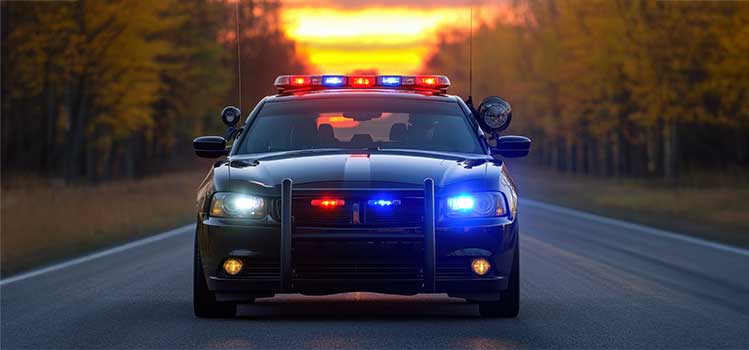
According to the U.S. Bureau of Labor Statistics (BLS), Ohio is the seventh largest employer of police and sheriff’s patrol officers in the U.S., with some 24,050 officers working in the combined forces. The Ohio State Highway Patrol (OSHP) is the overseer of state troopers, and is one of the most respected state police agencies in the country. It is widely recognized as one of the most professional and well-trained law enforcement agencies in the country.
Here are the education and training steps you’ll need to take in order to join state troopers in Ohio.
In this article
To become a state trooper with the Ohio State Highway Patrol (OSHP), applicants must meet specific eligibility criteria and successfully complete a multi-step selection process.
While the Ohio State Highway Patrol (OSHP) outlines specific minimum requirements for becoming a state trooper, certain qualifications, though not mandatory, may enhance a candidate’s application:
To enter the Ohio State Highway Patrol (OSHP) Academy, applicants must pass a physical fitness assessment based on the 20th percentile of the Cooper Standards, adjusted for age and gender. This assessment includes three components:
Performance standards for fitness events are adjusted based on the candidate’s age and gender. It’s important to note that these are the minimum entry standards.
Candidates must meet specific educational requirements and may benefit from additional qualifications that, while not mandatory, may enhance their candidacy.
All applicants must possess a high school diploma or a General Equivalency Diploma (GED) to be eligible for the position.
While not required, pursuing or holding an associate or bachelor’s degree, particularly in fields such as criminal justice, law enforcement, emergency management or public safety, can demonstrate a strong academic foundation relevant to the role.
Since law enforcement officers in Ohio perform different duties and are supervised by potentially different agencies, it’s important to understand the basic differences between the personnel using the name. Here’s a comparison chart that breaks down police officers, sheriff’s patrol officers and Ohio state troopers across key criteria:
State troopers:
Jurisdiction: Statewide (primarily highways, but can act anywhere in Ohio)
Employer: State government (Ohio Department of Public Safety)
Main duties: Enforce traffic laws on highways, assist in emergencies, drug interdiction and crash investigations
Reports to: Superintendent of the OSHP (appointed by Governor)
Notable: Troopers attend one of the most demanding paramilitary-style academies in the nation
Police officers:
Jurisdiction: City or municipal limits
Employer: City or municipal government
Main duties: Respond to 911 calls, patrol neighborhoods, investigate crimes and enforce local laws
Reports to: Police Chief (appointed by city officials)
Notable: May wear different uniforms and drive different cruisers depending on the city
Sheriff’s patrol officers:
Jurisdiction: County-wide (includes unincorporated areas)
Employer: County government
Main duties: Patrol rural areas, serve warrants, run county jails and court security
Reports to: Elected Sheriff
Notable: Sheriffs are elected officials—voters choose the top law officer
Once you complete the online application and required forms, here’s what you can expect next:
Written exam
Complete a reading comprehension test
Physical fitness assessment
Undergo a polygraph test
Pass an intensive background check
Medical exam
Psychological evaluation
Once you complete all of the above steps—and if you are selected—cadets undergo approximately 24–26 weeks of paid, intensive paramilitary training at the OSHP Academy.
The Ohio State Highway Patrol (OSHP) Training Academy offers a rigorous, immersive experience designed to prepare cadets for the demands of a state trooper career.
Cadets reside at the Columbus-based academy five days a week for approximately six months. Each day follows a strict, paramilitary routine. Here’s a sample daily schedule:
| 6:00 am | Rise and reveille |
| 6:10 to 6:30 am | Physical training |
| 6:50 am | Breakfast |
| 7:15 to 7:40 am | Work duties are assigned |
| 7:45 to 8:00 am | Inspection and morning colors |
| 8:00 am to 5:00 pm | Classroom and practical training, lunch, more classroom and training |
| 5:10 pm | Retreat |
| 5:15 pm | Dinner |
| 6:00 to 9:55 pm | Practical training, study time or recreation |
| 10:00 pm | Lights out |
Cadets receive college-level instruction in various areas, including:
The academy emphasizes both physical fitness and mental resilience. Cadets are encouraged to prepare by engaging in activities such as long-distance running, strength training and flexibility exercises. The training environment is designed to test cadets’ ability to perform under stress, with a focus on discipline, regimentation and coping with being away from family.
Upon successful completion of the academy, cadets graduate to the rank of trooper. New troopers then undergo a field training period of at least 70 working days, gaining hands-on experience under the guidance of a field training officer. After this, they return to the academy for an additional week of specialized training.
Advancing within the Ohio State Highway Patrol (OSHP) offers a structured path for career growth, encompassing both leadership roles and specialized positions. Here’s an overview of how troopers may be able to progress in their careers:
After two years of field experience, troopers can apply for specialized positions that align with their interests and skills, such as:
After serving as a trooper for three years, individuals become eligible to enter the promotional process, which includes:
| Promotions ladder | Duties |
|---|---|
| Sergeant | Supervises troopers and support staff, coordinating daily operations |
| Lieutenant | Serves as a post commander or administrative assistant at General Headquarters, managing operations and implementing statewide policies |
| Staff Lieutenant | Oversees specialized functions and supports higher-ranking officers in strategic initiatives |
The annual median wage of state troopers in Ohio may not be as high as other states, according to the BLS, but Ohio’s cost of living is also lower than the national average. Take a look at median salaries for Ohio-based police and sheriff’s officers:


10%$49,390
25%$61,670
50%$77,050Median
75%$90,270
90%$104,430
Median Hourly Wage$37
Job growth3.1%
Total Employment24,050
| Metro area | Median Salary | Bottom 10% | Top 10% |
|---|---|---|---|
| Columbus, OH | $99,960 | $56,570 | $112,740 |
| Cleveland, OH | $81,730 | $55,360 | $93,980 |
| Cincinnati, OH-KY-IN | $80,410 | $54,600 | $96,240 |
| Dayton-Kettering-Beavercreek, OH | $77,030 | $58,490 | $94,980 |
| Akron, OH | $75,540 | $49,650 | $88,650 |
| Toledo, OH | $74,520 | $49,390 | $87,260 |
| Mansfield, OH | $68,200 | $48,460 | $75,300 |
| Sandusky, OH | $66,400 | $37,920 | $87,900 |
| Canton-Massillon, OH | $64,990 | $47,160 | $78,220 |
| Springfield, OH | $62,420 | $46,820 | $94,560 |
Source: U.S. Bureau of Labor Statistics (BLS) 2024 median salary; projected job growth through 2034. Actual salaries vary depending on location, level of education, years of experience, work environment, and other factors. Salaries may differ even more for those who are self-employed or work part time.
The job growth outlook for state troopers in Ohio is slightly lower than the national average for job growth, said O*Net, a subsidiary of the BLS. While the national job growth rate for police and sheriff’s patrol officers is 3.1% through 2034, O*Net reported a 3% projected growth through 2030 for Ohio, adding an additional 1,890 officers to the field during that time.
Take a look at the steps you’ll need to take to become a state trooper in other states: