
By: All Criminal Justice Schools Staff
Updated: September 15, 2026

Find Criminal Justice Salaries for Your State
Learn what you may be able to earn in your state, how the cost of living and other factors could impact your pay, why education matters—and much more.
By: All Criminal Justice Schools Staff
Updated: September 15, 2026

North Carolina’s combination of diverse career opportunities, competitive salaries, strong educational infrastructure, supportive professional associations, economic stability and high quality of life make it an excellent state for criminal justice careers.
North Carolina offers a wide range of opportunities in the criminal justice field, including:
Let’s delve into the salaries for different criminal justice careers using data from the U.S. Bureau of Labor Statistics (BLS).
In this Article
There are 21,300 people employed as police and sheriff’s patrol officers in North Carolina says the BLS. This means for every 1,000 people, 4.4 are police or sheriff’s officers. The median wage per hour is $29 and the forecasted job growth for the coming decade is 3.5%.
North Carolina has a strong and growing economy with significant investments in technology, finance and education sectors. This growth supports the expansion of public safety and criminal justice services. The state has adequate state and local government funding for public safety initiatives, leading to better salaries and resources for criminal justice professionals.
Additionally, North Carolina offers a promising quality of life and is the 9th fastest growing state in the U.S. (1.2% growth in 2024) says Data Pandas. Reasons for this positive uptick include:
Here are five top employers for criminal justice careers in North Carolina:
Criminal justice—a category that includes careers in cyber security, local and federal law enforcement, legal professions, emergency management, forensics, investigations and corrections—besides being a diverse career field, also offers a diverse array of salaries. Pay may vary depending upon several factors, including where you work and live, how much experience you have, what certifications you have earned, and your level of education. Some career fields are affected by state government, some are regulated by federal government or unions. Here are median annual salaries for different careers under the criminal justice umbrella.
You can see the median national salaries for criminal justice career fields above, but what are the salary averages and medians specific to North Carolina? Take a look:
The median annual salary for police and sheriffs in North Carolina is $59,300. Even with its regional offices for the FBI, DEA and ATF in state, NC does not rank in the top five paying states in the U.S. for police and sheriffs. However, it’s important to note that individual salaries may be based on experience, education and location within the state. Here are median salaries for cities within North Carolina as well as state-wide salary ranges.
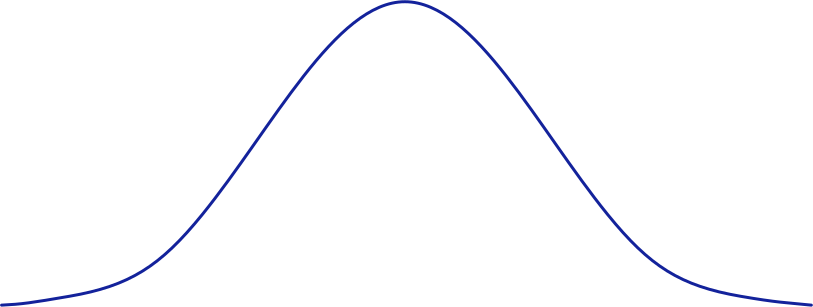

10%$46,040
25%$49,460
50%$59,300Median
75%$72,700
90%$80,240
Median Hourly Wage$29
Job growth3.5%
Total Employment22,370
| Metro area | Median Salary | Bottom 10% | Top 10% |
|---|---|---|---|
| Raleigh-Cary, NC | $65,860 | $55,620 | $80,870 |
| Burlington, NC | $65,700 | $55,650 | $83,190 |
| Charlotte-Concord-Gastonia, NC-SC | $63,190 | $49,850 | $94,430 |
| Rocky Mount, NC | $62,750 | $48,370 | $77,110 |
| Greensboro-High Point, NC | $60,830 | $50,790 | $81,550 |
| Durham-Chapel Hill, NC | $60,100 | $47,420 | $78,020 |
| Jacksonville, NC | $59,540 | $46,070 | $73,320 |
| Pinehurst-Southern Pines, NC | $58,560 | $46,350 | $70,540 |
| Asheville, NC | $58,090 | $46,190 | $77,840 |
| Winston-Salem, NC | $57,440 | $43,810 | $75,750 |
Source: U.S. Bureau of Labor Statistics (BLS) 2025 median salary; projected job growth through 2035. Actual salaries vary depending on location, level of education, years of experience, work environment, and other factors. Salaries may differ even more for those who are self-employed or work part time.
The salary range for police and sheriffs in North Carolina typically spans from $46,040 to $80,240 per year. This accounts for entry-level positions to senior-level roles and takes into consideration the other factors such as experience, rank, whether a degree has been earned and time in the position.
Your earning level may depend upon where you live within a state. For example, cities tend to pay better than rural or less populated areas. If your city is an industry hub, such as Charlotte or Raleigh, which have federal, and state agencies, pay may be more competitive. Pay may also be more competitive because cities could have a higher cost of living and employers are willing to pay more to keep talent. That said, here’s what the BLS reports as highest paying cities in the U.S. for different criminal justice career fields:
As you can see, California pays highest across the board and North Carolina has no cities or metro areas in the BLS’s top five metro areas for pay or highest employment of police officers.
North Carolina has no metro areas that rank in the top five for pay according to the BLS.
North Carolina’s Charlotte-Concord-Gastonia metro area ranks for top paying metro areas for detectives and private investigators.
Police and sheriff’s patrol officers have a 3.5% job growth rate predicted through 2035 says the BLS. This is just slightly higher than the national average for all other career fields combined. Some other criminal justice career job growth rates are as follows:
| Criminal justice career | BLS predicted job growth rate through 2035 |
|---|---|
| Paralegals and legal assistants | -0.3% |
| Corrections officers | -7.4% |
| Information security analysts | 21% |
| Private investigators | 5.5% |
| Forensic science technicians | 13.3% |
| Emergency management directors | 3.9% |
Earnings in criminal justice careers in North Carolina are influenced by several factors, some of which are specific to the state. Here’s an overview of these factors:
Fair pay in North Carolina takes into account the cost of living, industry standards, your experience and education, job responsibilities and market demand. By researching salary data, consulting professional associations, reviewing job listings and networking with peers, you can determine if your pay is fair and on par with others in your field. If discrepancies arise, you can take informed steps to address them.
Here’s how you can assess whether your pay is fair and on par with others in similar roles:
Research salary data by using:
State and local government resources:
For instance, if you are a police officer in Raleigh, you can:
By comparing this data, you can determine if your salary aligns with regional standards and take appropriate action if it doesn’t.
North Carolina offers a range of educational pathways for criminal justice careers, from police officers and paralegals to correctional officers and private investigators. Institutions like the University of North Carolina at Chapel Hill, North Carolina State University, East Carolina University, Appalachian State University and Campbell University provide excellent programs in criminal justice and legal education. These programs equip students with the necessary knowledge, skills and credentials to succeed in their chosen careers within the criminal justice field.
Here are basic education requirements for select criminal justice careers in North Carolina:
Minimum education: High school diploma or GED.
Preferred education: Some positions may require or prefer some college coursework or an associate degree in criminal justice.
Training: Completion of the North Carolina Department of Public Safety Correctional Officer Training Program.
Additional requirements: Background checks, physical fitness tests and psychological evaluations.
Minimum education: High school diploma or GED.
Preferred education: Some departments prefer or require an associate or bachelor’s degree in criminal justice or a related field.
Training: Completion of a Basic Law Enforcement Training (BLET) program approved by the North Carolina Criminal Justice Education and Training Standards Commission.
Additional requirements: Pass physical fitness tests, written exams, background checks and psychological evaluations.
Minimum education: Associate degree in paralegal studies or a related field.
Preferred education: Bachelor’s degree in paralegal studies or a related field is often preferred.
Certification: Certification from a recognized organization like the National Association of Legal Assistants (NALA) or the American Bar Association (ABA) can enhance job prospects.
Training: On-the-job training and continuing legal education to stay updated with legal procedures and technologies.
Minimum education: High school diploma or GED.
Preferred education: Some college coursework or a degree in criminal justice, law enforcement or a related field.
Licensing: Licensure is required in North Carolina, which includes passing an exam and meeting experience requirements (typically five years of investigative experience or equivalent).
Training: On-the-job training and continuing education.
When evaluating criminal justice salaries in different areas of Virginia, it’s important to consider the cost of living. The cost of housing, transportation, healthcare, utilities and other day-to-day expenses can vary across cities or regions. Assessing the cost of living helps you gauge how salaries align with local expenses and may help you make more informed decisions about job opportunities or potential relocation.
Cost of living overview:
Overall, the cost of living in North Carolina is slightly below the national average. Housing costs are a significant factor in this, as they are generally more affordable than in many other states. Lower taxes and relatively affordable healthcare also contribute to the state’s lower overall cost of living. North Carolina offers quality public services, including education and public safety, contributing positively to the overall quality of life. RentCafe says North Carolina is 5% lower than the national average as far as cost of living.
Cities with the highest cost of living:
Only Chapel Hill lists a higher than the national average cost of living at 4% higher, with Durham registering right at the national average cost of living mark.
Cities with the lowest cost of living:
Fortunately, North Carolina has several cities that rest under the national average but require criminal justice skills and expertise due to being agency hubs. Some of these cities include Raleigh (2% lower), Charlotte (3% lower), Winston-Salem (6% lower) and Greenville (2% lower).
These associations provide valuable resources, support and professional development opportunities for individuals in various criminal justice careers in North Carolina, helping to enhance their skills, knowledge and networking capabilities.
North Carolina Association of Chiefs of Police (NCACP): The NCACP provides leadership, advocacy, training and networking opportunities for police chiefs and law enforcement executives throughout North Carolina. It focuses on enhancing the professional development of its members and promoting best practices in policing.
North Carolina Paralegal Association (NCPA): The NCPA supports the professional advancement of paralegals in North Carolina by offering continuing legal education, networking opportunities, resources and advocacy. It aims to enhance the skills and professionalism of paralegals across the state.
North Carolina Correctional Association (NCCA): The NCCA supports corrections professionals by providing training, resources and advocacy to improve correctional practices and enhance the professionalism of those working in the corrections field. It also offers networking opportunities and professional development.
North Carolina Association of Private Investigators (NCAPI): The NCAPI represents licensed private investigators in North Carolina, offering members education, legislative advocacy and networking opportunities. It aims to advance the profession and maintain high ethical standards among private investigators.
This salary guide for North Carolina aims to provide you with a comprehensive understanding of the salary landscape and key information regarding the many career fields under the criminal justice umbrella. Use this guide as a starting point to make informed decisions about your career path, negotiating salaries and for setting realistic expectations for your educational and professional future.