
By: All Criminal Justice Schools Staff
Updated: January 8, 2026
Find Criminal Justice Salaries for Your State
Learn what you may be able to earn in your state, how the cost of living and other factors could impact your pay, why education matters—and much more.
By: All Criminal Justice Schools Staff
Updated: January 8, 2026
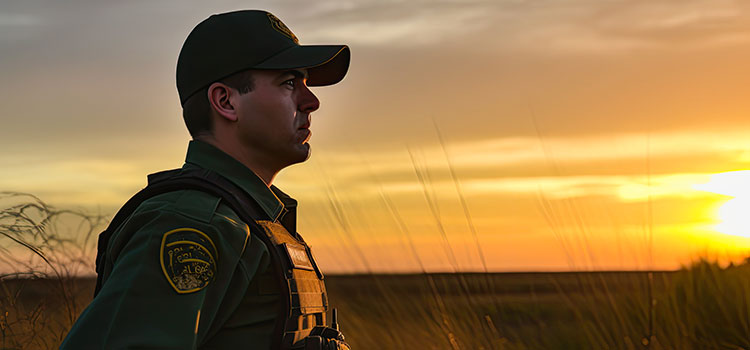
Arizona’s combination of a growing population, strong educational institutions, diverse employment opportunities based on specific state needs and a supportive legislative environment makes it an excellent state for criminal justice careers. The unique challenges and opportunities presented by its geographic location and demographic diversity further add to its appeal for professionals in this field.
With these reasons in mind, let’s take a look at salaries for different criminal justice careers using data from the BLS.
In this Article
Though there are many careers under the criminal justice umbrella, we’ll focus on the largest group—law enforcement officers, including police and sheriff’s patrol officers. There are 12,580 people employed as police and sheriff’s patrol officers in Arizona said the BLS. This means for every 1,000 people, just over four are a police or sheriff’s officer. The BLS said the Sierra Vista-Douglas metropolitan area has the 10th highest concentration of police and sheriff’s jobs in the U.S. The median wage per hour is $38 and the forecasted job growth for the coming decade is 3.5%.
With a significant border with Mexico, Arizona has a high demand for border security and immigration enforcement roles, offering unique career opportunities in federal agencies such as U.S. Customs and Border Protection.
These employers represent a broad spectrum of opportunities across the criminal justice field in Arizona, including state and local law enforcement, federal border security, correctional management and legal prosecution.
Criminal justice professionals’—a category that includes careers in cyber security, federal law enforcement agencies such as the FBI, DEA, ATF and CIA, the legal professions, emergency management, homeland security, forensics and corrections—pay may vary depending upon several factors, including where you work and live, how much experience you have, what certifications you have earned, and your level of education. Here are median annual salaries for different careers in Arizona.
Salaries for criminal justice professionals in Arizona are generally competitive, with some counties and metro areas ranking well for pay.
The median annual salary for police and sheriff’s patrol officers in Arizona is $78,880. It’s important to acknowledge that salaries may be based on experience, education, department, rank and location within the state. Here are median salaries for cities within Arizona as well as the state-wide median from the BLS.
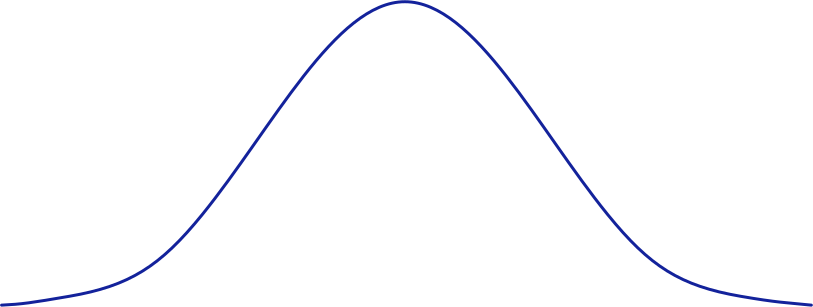

10%$60,990
25%$68,550
50%$78,880Median
75%$96,800
90%$98,560
Median Hourly Wage$38
Job growth3.5%
Total Employment12,010
| Metro area | Median Salary | Bottom 10% | Top 10% |
|---|---|---|---|
| Phoenix-Mesa-Chandler, AZ | $85,050 | $64,550 | $98,560 |
| Flagstaff, AZ | $78,670 | $60,710 | $92,480 |
| Tucson, AZ | $76,970 | $57,990 | $100,510 |
| Prescott Valley-Prescott, AZ | $74,030 | $58,870 | $91,600 |
| Lake Havasu City-Kingman, AZ | $72,500 | $56,420 | $91,600 |
| Yuma, AZ | $65,510 | $54,890 | $78,020 |
| Sierra Vista-Douglas, AZ | $60,110 | $51,420 | $91,600 |
Source: U.S. Bureau of Labor Statistics (BLS) 2025 median salary; projected job growth through 2035. Actual salaries vary depending on location, level of education, years of experience, work environment, and other factors. Salaries may differ even more for those who are self-employed or work part time.
The salary range for police and sheriffs in Arizona spans from $60,990 for the lowest 10% of earners to $98,560 per year for the highest 10%. This accounts for entry-level positions to senior-level and high-ranking roles and takes into consideration the other factors such as education and whether a degree has been earned, as well as time in the position.
Your earning level may depend upon where you live within a state. Logically, cities—with their higher cost of living—tend to pay better than rural or less populated areas. If your city is an industry hub, say for example you work in Phoenix or Tucson, which are home to many federal and state agencies, pay may be more competitive. That said, here’s what the BLS reports as highest paying cities in the U.S. for different criminal justice career fields:
As you can see, California metro areas pay highest across the board, taking all of the top five spots, and Arizona cites and metro areas do not rank in the top 10 for highest pay. The Sierra Vista-Douglas metro area does rank at #10 for highest concentration of jobs, however, and the BLS said the Arizona nonmetropolitan area with the highest concentration of jobs for police and sheriffs also ranked #1 in the country. The BLS defined this area as the following counties:
California metro areas again take the top spots for pay, and Arizona has no metro areas in highest pay, highest quotient of jobs or highest level of employment in the U.S. said the BLS.
Arizona’s metro areas don’t rank in the top 10 for highest pay, however the Phoenix-Mesa-Scottsdale metro area ranks #6 for highest level of employment of private investigators in the U.S. said the BLS:
Police and sheriff’s patrol officers have a 3.5% job growth rate predicted through 2035 said the BLS. This is just slightly higher than the national average for all other career fields combined. Some other criminal justice career job growth rates are as follows:
| Criminal justice career | BLS predicted job growth rate through 2035 |
|---|---|
| Paralegals and legal assistants | -0.3% |
| Corrections officers | -7.4% |
| Information security analysts | 21% |
| Private investigators | 5.5% |
| Forensic science technicians | 13.3% |
| Emergency management directors | 3.9% |
In Arizona, several factors specific to the state’s geography and economy may influence criminal justice salaries. Here are some things to consider about pay—besides the usual factors such as education level, experience and any specialization—when assessing Arizona as a destination for your criminal justice career:
If you believe you are not being paid equitably in Arizona, there are several steps you can take to address the issue:
1. Understand your rights
2. Gather evidence
3. Internal resolution
4. Seek legal advice
5. File a complaint
6. Utilize union resources
7. Consider mediation or arbitration
8. Explore other employment options
Summary
The educational requirements for criminal justice roles in Arizona may vary depending on the specific role and the agency or organization, though they generally align with national standards. Here are some common criminal justice positions and their typical education requirements:
High school diploma or GED: The minimum requirement for becoming a police officer in Arizona.
Police academy training: Completion of a police academy certified by the Arizona Peace Officer Standards and Training Board (AZPOST) is mandatory.
Optional higher education: Some departments may prefer or require an associate or bachelor’s degree in criminal justice or a related field for advancement.
Associate degree: Many paralegals start with an associate degree in paralegal studies from an accredited institution.
Bachelor’s degree: A bachelor’s degree in any field, coupled with a certificate in paralegal studies, is also a common path.
Certificate programs: Post-baccalaureate certificate programs in paralegal studies are available for those who already hold a degree in another discipline.
Certification: Optional certifications can be obtained from organizations such as the National Association of Legal Assistants (NALA) or the National Federation of Paralegal Associations (NFPA). The Advanced Certified Paralegal (ACP) certification is for those who want to demonstrate expertise in specific areas of law, which in Arizona could be immigration law.
High school diploma or GED: The basic requirement for state and federal correctional officers.
Training program: Completion of a correctional officer training program is required.
Higher education: Some positions may prefer candidates with a degree in criminal justice, criminology or penology or a related field.
Bachelor’s degree: Required in forensic science, biology, chemistry or a closely related field.
Advanced degrees: A master’s degree or PhD may be required for higher-level positions or specialized roles.
Cost of living overview:
RentCafe says the cost of living in Arizona is 6% higher than the national average, with housing up 18% higher than the national average while utilities are 4% lower. Part of the rising cost of living may be attributed to Arizona’s rapid population growth. WiseVoter says Arizona is the 9th fastest growing state in the U.S. as of 2024 with a population growth rate of 10%.
Cities with the highest cost of living:
Cities that are higher for cost of living than the national average are Lake Havasu City (24% higher), Gilbert (15% higher), Scottsdale (13% higher), Tucson (4% higher) and Phoenix (2% higher).
Cities with the lowest cost of living:
Regardless of rapid growth, there are still cities in Arizona that have a lower cost of living than the national average. For example, Surprise is at 0% or right at the national average, Bullhead City is 8% lower and Sierra Vista, which is a prime spot for high quotient of law enforcement jobs, is 9% lower.
These professional groups offer valuable resources, networking opportunities and support for criminal justice professionals in Arizona, helping them stay informed, connected and with the opportunity to develop the skills to advance in their field.
Arizona Association of Chiefs of Police (AACOP): The association offers conferences, workshops, leadership development programs, and legislative advocacy to support law enforcement professionals.
Arizona Paralegal Association (APA): The APA provides continuing legal education (CLE) opportunities, hosts events and conferences and offers resources for career development.
Southwest Association of Forensic Scientists (SWAFS): SWAFS offers training seminars, annual conferences and publications to keep members updated on the latest developments in forensic science.
Arizona Correctional Peace Officers Association (AZCPOA): AZCPOA engages in legislative advocacy, provides training and professional development opportunities and offers legal support for its members.
This salary guide for Arizona strives to provide you with a comprehensive understanding of the salary landscape and key information regarding the many career fields under the criminal justice umbrella in Arizona. Use this guide as a starting point to make informed decisions about your career path, negotiating salaries and for setting realistic expectations about your educational and professional future in Arizona.