
By: Anna Giorgi

Updated: January 8, 2026

By: Anna Giorgi
Updated: January 8, 2026
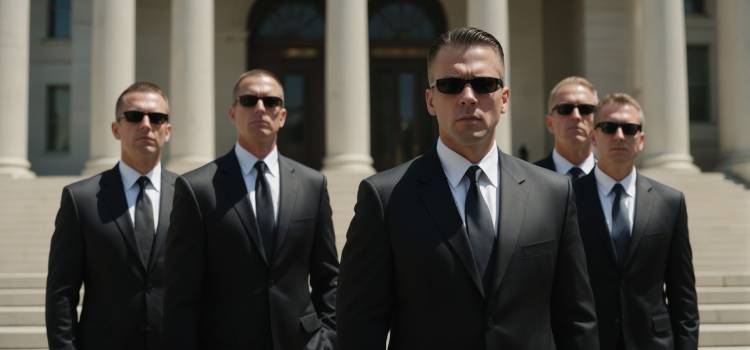
The U.S. Secret Service is a federal law enforcement agency with a dual mission: protecting national leaders and investigating complex financial and cybercrimes. Becoming a Secret Service special agent is a challenging and highly competitive process that requires meeting strict qualifications, completing a multi-stage hiring process and passing intensive training. While the position is demanding, it offers unique opportunities to protect the country and contribute to high-impact investigations.
In this article
The role of a U.S. Secret Service special agent combines investigations, protection, teamwork and a profound commitment to national security. It offers unparalleled opportunities to make a difference by protecting the nation’s leaders, safeguarding the financial integrity of the United States and contributing meaningfully to the safety and stability of the country.
“Your career in the Secret Service is going to have investigative measures that are going to be conducted on various cases that the Secret Service investigates, such as counterfeiting, bank fraud, mortgage fraud, identity theft and things of that nature. And, then you’re going to have a protective missions aspect, which will be time on a protective detail of a president, vice president, former president and/or their families, as well as various other supportive protective missions along your career,” said Robert E. McDonald, MS, Assistant Professor of Practice, Department of Criminal Justice and Criminology at the University of New Haven.
To succeed in this role, special agents require a combination of skills, a commitment to serving our nation and acceptance of the realities involved in this position. Due to the nature of the role, U.S. Secret Service special agents must be prepared to work on a diverse range of assignments that can involve frequent travel, demanding schedules, irregular hours and high-pressure missions.
Qualifying for a position as a U.S. Secret Service special agent involves a rigorous multi-stage hiring process and mandatory training. Consult the U.S. Secret Service government website for current hiring criteria and detailed instructions on the application process, which includes the following steps:
Candidates for the position of U.S. Secret Service special agent must meet the following basic eligibility requirements to apply:
U.S. Secret Service special agent candidates must meet one of the following education and/or experience requirements:
Bachelor’s degree or higher
While degrees in criminal justice, cyber security, accounting, finance, foreign languages or law can be helpful, any major from an accredited college or university can meet this requirement. Candidates should have an academic history that demonstrates superior academic achievement.
“Typically, candidates don’t apply directly out of college but based on the current situation with law enforcement agencies needing personnel, people retiring and people not wanting to get into the discipline, more often, college graduates are able to get into the Secret Service directly from college,” McDonald said.
Equivalent specialized experience
Certain law enforcement or investigative roles may substitute for formal education if they involve competencies relevant to the special agent role. This experience may involve interviewing, surveillance or criminal investigation.
Combination of education and expertise
A mix of both education and experience may also be applicable, depending on the requirements of the position posting.
Each candidate is evaluated based on their unique education and experience. “For special agents, you’re looking at a well-rounded individual with a myriad of different disciplines studied in college. Many applicants now have master’s degrees,” McDonald said. “You don’t have to have been a cop, you don’t have to have a degree in criminal justice, you don’t have to have a law degree. You must have a degree, but you also have to be a well-rounded individual. Everyone brings something to the table. We want a very diverse and educated workforce to work for us.”
Apply for open U.S. Secret Service special agent positions by submitting a resume, transcripts and other required documents at USAJOBS.gov, the U.S. government’s official website for applying to federal positions. Your qualifications and resume will be reviewed to ensure you meet the minimum requirements for the position.
“We look for all those types of things that go into the augmentation of a resume. Whether it’s internships, additional training, time in the military or experience in the banking industry, perhaps with a specialty in financial advising or knowing how money works in situations like credit card fraud. Any type of training or interest in a specific niche around financial institutions and things of that nature is always going to be a positive for someone on their resume,” McDonald said.
If your application indicates that you could succeed, you will be contacted and must pass the following Phase I competency assessments to receive a conditional job offer:
Applicants who pass Phase I competency assessments must successfully pass Phase II security assessments to receive final consideration for employment as a special agent:
It can take six to nine months for completion of the background investigation. The process involves verification of your school transcripts, employment history, credit history, police records, neighborhood references and military records.
After accepting an employment offer, new special agents must complete months of intensive training through the following multi-phase program:
Phase I: Federal Law Enforcement Training Center (FLETC) in Glynco, Georgia
Special agent trainees complete the Criminal Investigator Training Program (CITP), which covers foundational investigative skills in federal law, interviewing, defensive tactics, firearms, surveillance and report writing in about 10 to 12 weeks or 59 training days.
Phase II: Secret Service Special Agent Training Course in the James J. Rowley Training Center (JJRTC) in Laurel, Maryland
After completing CITP, special agent trainees complete a course of rigorous Secret Service-specific instruction in the following areas:
Most new special agents in the U.S. Secret Service start their careers in a field office for three to five years, where they develop critical investigative expertise. Your assignment will be based on availability/need and your current location, though you may be required to relocate. Early career responsibilities can include:
After field experience, special agents typically rotate into assignments that involve protection and security for:
After completing a protection assignment of three to five years, agents have several options for reassignment based on availability and operational needs. These choices can include a permanent protective assignment, a training assignment, other Washington, D.C.-based assignments, or roles in a field office or headquarters office.
The salary you earn as a U.S. Secret Service agent depends on factors including your education, professional experience, geographic area, special skills such as foreign language proficiency and the demand for qualified applicants.
Secret Service special agents are paid under the federal pay-scale system for law enforcement employees. Entry-level agents typically begin at GL-07 or higher, depending on qualifications, then move up “grades,” and the pay scale as experience and promotions occur. Special agents also qualify for federal Law Enforcement Availability Pay (LEAP), up to an additional 25% of base pay because their duties often require availability outside a typical 40-hour work weeks.
While the U.S. Bureau of Labor Statistics (BLS) does not report occupational data specifically for U.S. Secret Service special agents, it includes federal law enforcement agent salaries under the broader category of detectives and criminal investigators. In this category, the median annual salary is $93,790, with the lowest 10% of professionals earning $55,390 and the highest 10% earning more than $160,540.
The day-to-day life of a U.S Secret Service special agent is challenging due to their involvement with intense and varied types of work. While no two days are the same, here’s what you can expect while working as a U.S. Secret Service special agent, depending on the type of detail to which you’re assigned:
“A typical day of an agent in a field office is going to be conducting investigations in that district. So, if you’re in the New York field office, you conduct investigations in the geographical area that would be covered by that office,” McDonald said. “In a field office, your typical day would be 9 to 5, but if someone makes a threat against the president at two o’clock in the morning, you’re going to get called to go out and investigate it.”
“If you’re on a protective detail, you’re either reporting to the White House or the Vice President’s residence at the beginning of your shift every day. We work 24/7, 365, so you could be working mornings, afternoons, midnights, etc. During that time, you could be traveling, you could be doing advance work, you could be in training, you could be doing a myriad of things,” McDonald said.
The success of the U.S. Secret Service depends on an exceptional workforce comprising special agents who are highly trained and capable. The agency focuses on individuals committed to honor, integrity and excellence who have the skills necessary to support the mission of the agency.
The comprehensive application and screening process is intended to reduce the candidate pool through self-removal or agency disqualification so that only those individuals most likely to succeed as special agents remain. “Those people without the right qualities are going to be weeded out during the application process through information provided by the Service and through the written tests, physical tests, psychological tests, polygraph tests, medical tests, hearing tests and drug tests,” McDonald said.
Successful candidates for the role of U.S. Secret Service special agent possess:
“You’ll have plenty of integrity-based decisions that you’re going to have to make over the course of a workday, with how you’re going to arrest people, how you’re going to treat people, and the discretion that you have with respect to the violations that we investigate,” McDonald said.
The work of a U.S. Secret Service special agent involves performing critical investigative and protective assignments while making a tangible contribution to national safety. “You’re going to be working in your community. You’re going to be serving as a public servant for 25 years, working for the United States government, investigating the laws and implementing the Constitution of the United States. It’s a very rewarding position because you are going to be protecting the nation’s financial institutions and you’re going to be protecting the nation’s leaders,” McDonald said.
While the work of a U.S. Secret Service special agent can be meaningful and impactful, the position has inherent challenges. “This type of position and the choice to enter the application process are going to require some long and hard thinking from the applicant. As you can see from the website, it is well-detailed about the challenges that agents have to face every day. This is not for someone who is faint of heart or isn’t going to dive in 100%. This is a lifestyle and not only does the agent deal with stresses, but so does the family,” McDonald said.
The role of a special agent is also hard on families due to irregular hours, frequent travel and sudden relocations. The inherent stress, potential risk and exposure to critical incidents can impact family dynamics and home life. “It’s difficult for the families of agents because we work and travel. We work holidays, nights and weekends. We miss anniversaries, softball games and bar mitzvahs—all that stuff. This is a lifestyle that you choose to get involved with to serve your country,” McDonald said.