
By: Paige Cerulli

Chief Deanna Strout
Updated: January 7, 2026

By: Paige Cerulli
Chief Deanna Strout
Updated: January 7, 2026
A career as a police officer can be highly rewarding, but the process and requirements differ slightly in each state. In Massachusetts, there are a few potential routes to becoming a police officer, including taking the Massachusetts civil service exam or applying directly to departments that are hiring.
No matter which route you take, you’ll need to be prepared to meet the state’s hiring requirements which include a background check, passing a physical fitness test, and completing a police academy.
In this article
Chief Deanna Strout of the Dalton Police Department in Dalton, Massachusetts, said that a career in law enforcement can be rewarding but requires a certain type of person to be successful. “Being a police officer is a job of problem-solving all day long,” Strout said. “If you can communicate well with people, this is the job for you.”
Strout encouraged anyone interested in potentially becoming a police officer to start planning for that career early on. In addition to preparing to meet Massachusetts’ minimum standards for police officers (like having a valid Massachusetts driver’s license and a high school diploma or GED), Strout noted that everything from your driving history to the content you post on social media can follow you for years and affect your ability to become a police officer.
To become a Massachusetts police officer, you must be at least 21 years old, though you can take the civil service exam as early as age 19. You can be no more than 39 years old on the date of your examination.
Additionally, candidates must have a high school diploma or GED certificate and they must have a valid Massachusetts driver’s license. Candidates must be able to get a Massachusetts license to carry a firearm.
When appointed to the Police Academy, candidates must be Massachusetts residents. Additionally, candidates may not have been convicted of a felony or a drug law violation, and they cannot have been convicted of a misdemeanor or put in jail as a punishment for their crime.
Meet minimum standards.

To apply to become a police officer in Massachusetts, you must meet several requirements: have a valid Massachusetts driver’s license, be at least 19 and no more than 39 years old on the date of your examination, have a high school diploma or GED and be able to get a Massachusetts license to carry a firearm.
Some Massachusetts towns or cities like Boston may require you to have been a resident of the town or city for at least one year before you take your exam. Other towns like Cambridge offer residency preference to candidates who have been Cambridge residents for at least a year before taking their exam.
Consider earning a college degree or starting postsecondary education.

While Massachusetts doesn’t require police officer applicants to have a college degree or postsecondary education, pursuing such an education can help prepare you for the career and it may also help you stand out from other applicants.
Earning a Bachelor of Arts (BA) or Bachelor of Science (BS) in criminal justice can help develop your skills and knowledge, introduce you to key concepts like crime cause theories and investigative reconstructive techniques, and help you develop essential soft skills like communication and teamwork capabilities.
Take the Massachusetts civil service exam.
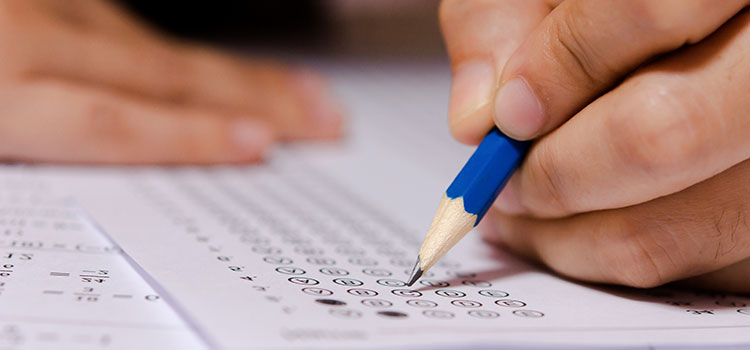
Massachusetts holds a civil service exam every two years. The examination includes three subtests:
1. Written ability test that measures areas including verbal expression, verbal comprehension, problem sensitivity, deductible reasoning, inductive reasoning and information ordering
2. Work styles questionnaire that evaluates motivational, value-related and attitudinal characteristics that are important for an entry-level police officer’s performance
3. Life experiences survey which is a series of multiple-choice questions relating to applicants’ past history and experience which may be relevant to their performance as police officers
Massachusetts has guides to help you prepare for the exam. Candidates with passing exam scores are then added to a list of eligible candidates which Massachusetts police departments can access when they need to fill vacancies.
While taking and passing the exam can help candidates potentially get interviews for vacancies at local departments, Strout explained that towns and cities are increasingly leaving the Massachusetts Civil Service exam program. “If you look at the number of towns and cities that are leaving civil service, it’s a mass exodus,” Strout said.
Instead of relying on the candidate test results provided by the civil service exam, Strout said that the Dalton Police Department has been holding its entrance exam for candidates. “An outside company comes in and administers the exam,” Strout said. “It’s based on knowledge and integrity. [The company] provides us a list of candidates that passed the exam in the order of the top score down.” Such an approach allows the department to evaluate local candidates, whereas the candidate lists provided by the state can include candidates from across the state who are unlikely to relocate.
Apply for law enforcement positions.
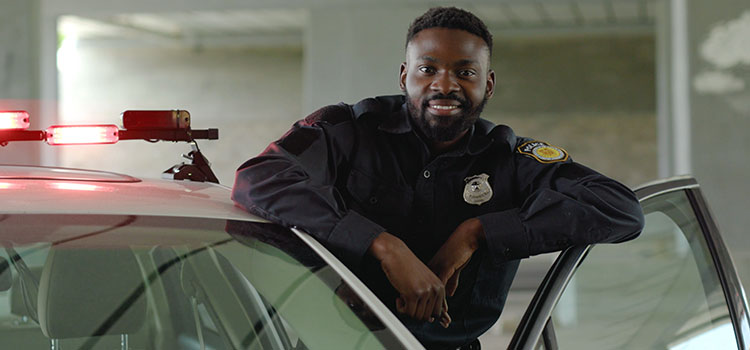
Taking and passing the Massachusetts civil service exam may help connect you to departments with vacancies. However, since more departments opt to take on their hiring processes, you may need to apply directly to the individual law enforcement agency. Application requirements will vary depending on the agency and you may be required to take an exam that the department holds.
The hiring process will include a thorough background check and an interview. Strout noted that the background check includes a 35-page application with references and employment history. Applicants must sign a release giving the department permission to get employment information from anywhere they’ve worked, and they must also disclose their social media handles. “Your social media footprint is huge,” Strout said. “If you’re making horrible racial, sexist posts, we’re not hiring you.”
Take and pass a medical exam and Physical Ability Test (PAT).

If you are offered a job, the offer of employment is conditional on your taking and passing a medical exam and a Physical Ability Test (PAT). The PAT includes:
1. An obstacle course in which, among other obstacles, you must go through an open window, over uneven terrain, climb over a wall, climb up and down steps and negotiate cones in a zigzag pattern within a time limit.
2. A separation event in which you must pull a hanging bag backward across a marked line within a 12.8-second time limit.
3. A dummy drag in which you must drag a dummy over a straight course within 11.2 seconds.
Complete a Massachusetts police academy training.

Finally, you must graduate from a Massachusetts police academy. The academy is an intensive 22-week program designed to prepare officers for the demands of the profession. Massachusetts schedules police academies periodically based on anticipated demand.
Keep up your continuing education requirements.

All Massachusetts police officers must complete continuing education annually. The Municipal Police Training Committee (MPTC) requires and provides specific continuing education that must be completed each year. Individual police departments may also seek out and participate in additional continuing education opportunities beyond those required by the MPTC.
Massachusetts requires police officer candidates to have a high school diploma or GED. At this time, there are no statewide higher education requirements.
“When I became a police officer, you had to be the best of the best,” Strout said. “You wanted to have a minimum of at least a bachelor’s degree in criminal justice. We have recruitment issues now, and I find there isn’t a lot of interest in wanting to be a police officer anymore. The actual requirements are the high school diploma or GED, a Massachusetts driver’s license, and the ability to get a license to carry.”
Higher education may not be required, but it can still be beneficial. Postsecondary education, such as a degree in criminal justice, may make candidates more competitive and may help them qualify for promotions over candidates without such degrees. Postsecondary degrees in other fields like public health, legal studies, psychology and communications can also be helpful, since the skills and knowledge gained can transfer into a law enforcement officer career.
Strout encouraged those thinking about becoming a police officer to go to school and earn a degree, become an EMT or go into the military. “Think about some of the things we do, learn about it and get yourself educated,” Strout recommended. “You have to be 21 to be a police officer in Massachusetts. You have time to do some things that would get you experience. Our job is hard, and we see terrible things daily. You need to learn whether you can deal with those things.”
Strout explained that being a police officer isn’t a career for everyone. “If this is not a job you’ve thought about for a long time, it generally doesn’t work out well for people who trip and fall on the opportunity.”
The police academy is likely the most challenging aspect of becoming a police officer. To get into an academy, participants must take and pass the Cooper test, a 12-minute running test that’s used to evaluate fitness.
Strout explained that the academy incorporates exercise, stress, teamwork-building skills, discipline and training, including learning how to write reports and follow orders. “It’s kind of modeled after a paramilitary experience,” Strout said. “You stand at attention and salute. It’s strict—if you don’t make it, you get kicked out.” Participants must pass fitness and educational challenges, including shooting at the range. “There are a lot of things that you have to pass, and if you don’t, you’re out.”
However, the difficulty of the academy makes its completion that much more significant. “It’s a rewarding experience,” Strout said. “I still remember when I graduated. It was one of the proudest moments of my life. It’s a huge accomplishment.”
Continuing education requirements
Every year, Massachusetts police officers must complete a certain amount of in-service training as mandated by the MPTC. “Every year we get specific training classes you can do in person or online,” Strout said. “This year’s trainings so far are called Rules of the Road, Officer Wellness, CPR First Responder, Police Reform and Post and Legal Updates.” Officers are required to complete all of the in-service training.
Additionally, Strout’s department recently completed a biased policing class. “We do a lot of training here,” Strout explained. “We participate in mandated training, but we also do other training.”
She noted that there are numerous opportunities for police officers to seek out additional training, including options like crisis intervention certification and crime scene classes.
Strout encouraged officers to go to as much training as possible and learn as many skill sets as they could. “We have three Sergeant positions, a K-9, a comfort dog and a DARE officer,” she says. “There are lots of specializations. I think it’s important to have a diverse group of field training officers. If a new candidate comes in, I’d like them to learn something from everyone. I think everyone brings something really important to the table. It takes all of them to have us operate effectively. They bring different experiences and perspectives.”
According to the U.S. Bureau of Labor Statistics (BLS), the median annual wage for police officers in Massachusetts was $78,940.
The BLS predicts that employment of police officers and detectives should grow by 3.5% through 2035, which is about as fast as the average growth for all occupations. Demand is predicted to vary by location, and state and local budgets play a key role in the employment and hiring of police officers.
Strout explained that different police departments have different opportunities, so applicants should consider the type of career they want to have and look for a department with those opportunities. “The bigger the department you go to, the more opportunities there are,” Strout said, “but there’s more competition for those opportunities.”


10%$61,160
25%$71,970
50%$78,940Median
75%$97,390
90%$108,150
Median Hourly Wage$38
Job growth3.5%
Total Employment17,040
| Metro area | Median Salary | Bottom 10% | Top 10% |
|---|---|---|---|
| Springfield, MA | $83,050 | $52,000 | $126,880 |
| Barnstable Town, MA | $80,210 | $63,810 | $100,490 |
| Worcester, MA | $80,210 | $60,150 | $102,530 |
| Boston-Cambridge-Newton, MA-NH | $78,180 | $61,750 | $107,240 |
| Pittsfield, MA | $76,940 | $50,900 | $99,220 |
| Amherst Town-Northampton, MA | $73,480 | $50,480 | $105,510 |
Source: U.S. Bureau of Labor Statistics (BLS) 2025 median salary; projected job growth through 2035. Actual salaries vary depending on location, level of education, years of experience, work environment, and other factors. Salaries may differ even more for those who are self-employed or work part time.
State guides for prospective police officers
Take a look at the steps you’ll need to take to become a police officer in other states: