By: Mariah Beckman

Updated: March 17, 2026
By: Mariah Beckman
Updated: March 17, 2026
Serving your community as a member of law enforcement can be very rewarding. Police officers in North Carolina play a crucial role in maintaining public safety and order, and many find a strong sense of purpose in their work. They are driven by a commitment to upholding justice, enforcing laws and making a positive difference in society.
Becoming a police officer can be a lengthy process. Due to the unique nature of law enforcement work, a rigorous selection process is required. There are many steps candidates must go through to ensure that the men and women who serve and protect their communities have what it takes to succeed.
It’s important to thoroughly prepare for each stage of the application process, which includes physical fitness tests, interviews and background investigations. It’s vital that applicants have a clear understanding of the unique challenges and responsibilities associated with a career in law enforcement.
In this article
The standards listed below are the North Carolina Criminal Justice Education and Training Standards Commission-mandated minimum requirements for employment as a law enforcement officer, which may include sheriff’s patrol officers, police officers and state troopers. These individual agencies, however, could require higher or different standards.
Every law enforcement officer employed by an agency in North Carolina must:
The character and temperament of those in service has come under scrutiny more than once over the last decade. Veteran officer and current Director of the Basic Law Enforcement Training Program at Central Piedmont Community College, Major Patricia Brown, has seen this firsthand.
“Two of the most important soft skills for a law enforcement officer are empathy and compassion,” she says. “Every officer strives to have positive interactions with the people they encounter. Having empathy allows you to better understand what people are feeling, which promotes those positive interactions. Compassion allows you to put empathy into action. Compassion helps our officers in their determination to do what’s right.”
“There will be many stressful situations that will require a high level of patience. Actively listening can help establish trust between the officer and their audience which will help make them feel safe.”
–Major Patricia Brown
“Another important soft skill,” she adds, “is active listening. There will be many stressful situations that will require a high level of patience. Actively listening can help establish trust between the officer and their audience which will help make them feel safe.”
The Bureau of Labor Statistics lists these qualities on their occupational profile for police and detectives as well, alongside active listening, leadership and perceptiveness. Consider how you can build these skills and qualities as you begin your journey to law enforcement. Major Brown adds that students who are not open to constructive criticism, don’t possess a strong code of ethics, have strong personal biases or aren’t detail-oriented will find a career as an officer to be a difficult fit.
The process of becoming a police officer in North Carolina typically involves several steps. While the exact number and details may vary slightly depending on the law enforcement agency, here is a general overview of what you’ll need to do:
Meet the eligibility requirements for entry-level positions.

Check that you meet the minimum eligibility criteria, including age, citizenship, education and any other requirements set by the specific law enforcement agency. Generally speaking, the minimum requirements for North Carolina specify that candidates be 20 years of age or older, be able to pass a background investigation, possess a high school diploma or equivalent and completion of Basic Law Enforcement Training.
If you already plan on moving up the ranks to become a detective or sergeant, you may be interested in earning an associate or bachelor’s degree in criminal justice or a related field. Many agencies offer a pay incentive for those with a college degree, even as entry level candidates. Attending college after you begin your career as an officer, while not impossible, could be much more challenging.
Complete an application.

Submit an application to the North Carolina police department or departments that you’re interested in. Different cities and towns offer different salary ranges and benefits, and may have different requirements, so do your research.
Pass the written examination and physical fitness test.

If you meet the minimum requirements and are selected for an interview, you will be asked to complete a written exam. This exam covers various subjects, including law, ethics and situational judgment.
You’ll also need to pass a rigorous physical fitness test. In North Carolina, the standard exam is called the Police Officer Physical Agility Test. It’s a timed, pass/fail test that can only be taken twice every calendar year. Different departments have different standards, which could include components such as running, push-ups, squats or sit-ups.
Submit to a background check and polygraph examination.

After you’ve passed the written and physical tests, you’ll undergo a thorough background investigation. This includes a review of your criminal history, financial records and personal references. In addition, you’ll need to take a polygraph examination to verify the information provided during the application process.
Complete a psychological assessment and medical exam.
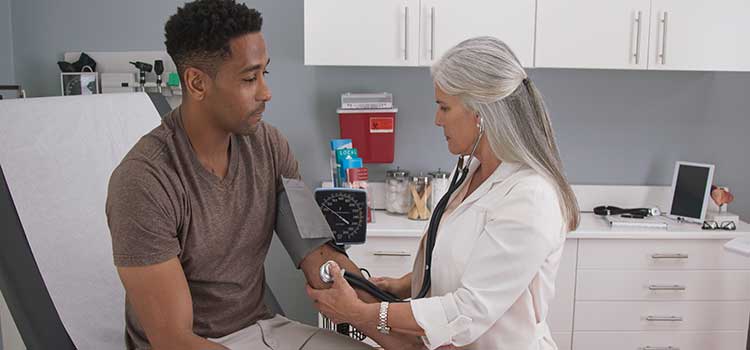
A psychological assessment is the next step in the evaluation process. This helps vet your suitability for the job and confirm a standard of mental well-being. Additionally, you need to complete a medical examination to ensure that you are physically fit for the demands of the position.
Attend BLET, complete field training and work through your probationary period.

If you pass this battery of qualifiers, you’re ready to attend Basic Law Enforcement Training (BLET) at an approved police academy. This training will cover a wide range of topics, including legal issues, use of force and practical skills. Upon successfully completing the training and probationary periods, you’ll graduate from the police academy and become a certified law enforcement officer.
After completing BLET, new officers typically undergo a probationary period where their performance is closely monitored. Here you’ll participate in field training, working alongside experienced officers to gain practical experience on the job.
Satisfy your continuing education commitment.

Every law enforcement officer certified by the Commission in North Carolina must receive 24 credits of in-service training each year. The curriculum is determined each year by the North Carolina Justice Academy.
Specific steps and their order might vary, and additional steps or requirements may be implemented by individual law enforcement agencies in North Carolina. Prospective police officers should thoroughly research the specific hiring process of the agency they are interested in and be prepared to meet all the requirements outlined by that agency.
The minimum education requirement to become a police officer in North Carolina is a high school diploma or its equivalent (such as the GED). Aside from the Basic Law Enforcement Training, there is no further education required to start a career as an officer.
However, it’s important to know that officers may need to meet post-secondary education benchmarks if they hope to advance their careers. Investing in a two- or four-year college degree may lead to a bump in pay as a rookie. It may also give candidates the edge over other applicants as they move higher up the ranks in their department.
As you research what subjects you might be interested in, consider the skills you may need as a police chief, captain or detective. Keep your own interests in mind as well. Many colleges offer degrees in criminal justice, and that’s a great place to start. Let your personal passions become your compass as you explore social work, psychology, forensic science and other majors that reflect your interest in public service.
Major Brown describes basic law enforcement training in North Carolina as “the entry point for law enforcement in the state.” This training is conducted through the North Carolina Basic Law Enforcement Training (BLET) program. The program is designed to provide aspiring law enforcement officers with the necessary knowledge and skills to perform their duties effectively and ethically.
The North Carolina Criminal Justice Education and Training Standards Commission (CJETS) sets the minimum requirements for law enforcement officers in the state. Their law enforcement training curriculum is comprehensive. It covers various aspects of law enforcement, including legal principles, patrol techniques, criminal investigations and community relations.
There are plenty of options when it comes to training in this state. Major Brown explains North Carolina has the second highest number of training academies per state in the nation (behind Texas). While every program has its merits, she recommends looking for a program like Central Piedmont CC’s that places focus on student success and the academic portion of training.
“Of course, we want to equip our recruits with the necessary physical tools and skills to do their job,” she explains, “but they also have to be quick on their feet when dealing with the public and deciding what elements fit the crime committed. We teach them how to retain the material learned and apply it to the job. Central Piedmont Community College BLET academy has a long-standing reputation for having a 100% pass rate on the state exam for all students testing.”
Major Brown describes basic training through her academy’s program as 36 blocks of instruction that are strategically arranged in a sequence. This series continues to build on top of previous training throughout the entire 16 weeks of instruction. “There is an extensive amount of hands-on training that includes real life scenarios, each one providing future officers with more than just book knowledge. Ethics training is a big component of CPCC’s curriculum, and this is implemented throughout the training experience.”
The BLET program typically lasts around 600 hours, but the exact duration may vary based on the training academy. The curriculum covers a wide range of subjects, including criminal law, arrest techniques, firearms training, defensive tactics, emergency vehicle operation and ethics. Students also learn about the legal aspects of law enforcement, constitutional rights and the use of force.
Basic training also includes extensive firearms training to ensure that officers are proficient in the use of firearms and can safely handle various situations. “Two of the biggest challenge areas we see new recruits wrestle with are in firearms and drivers training,” Major Brown says. “The average person is not engaging in defensive driving and car chases on a daily basis. Even those that consider themselves fairly good drivers may struggle when completing drivers training. Going through a series of courses that are designed to teach beyond the basic operational skills can be very challenging.”
Recruits have a limited time to complete a sizable amount of training, which tests the mettle of some candidates. Major Brown advises to make time for extra training when in doubt. “We currently offer 48 hours of training for our firearm training course,” she says. “Even those who have some experience with firearms may struggle because they have to unlearn bad habits they have been taught previously. We always suggest students get some practice in at a gun range, with a certified instructor, prior to starting the program.”
Physical fitness is a crucial component of the training too. Officers are required to meet certain fitness standards in order to graduate from the program. Those requirements vary, but they typically include being able to perform squats, push-ups, sit-ups, run and perform multi-step arrest procedures in a given amount of time.
Students in BLET undergo written examinations, practical exercises and skill assessments throughout the program to evaluate their understanding and proficiency in different areas. Upon successful completion of the BLET program, graduates are eligible to take the state certification exam. Once certified, individuals can pursue employment with law enforcement agencies in North Carolina.
It’s important to note that specific details and requirements may vary among different training academies in the state. Prospective law enforcement officers should check with the training academy they plan to attend for the most accurate and up-to-date information.
In-service training for law enforcement officers is a form of mandatory continued training. It is required to maintain good standing with your department. The goal of this continuing education is to ensure that officers stay current with evolving laws, technologies and best practices in policing.
The North Carolina Criminal Justice Education and Training Standards Commission (CJETS) oversees and sets the standards for in-service training. Specific training requirements are outlined by CJETS and cover a range of topics relevant to modern law enforcement practices. This could include updates to state and federal laws, changes in policies and procedures, cultural competency, de-escalation techniques, community policing and emerging issues in law enforcement.
Officers are typically required to complete a certain number of hours of in-service training each year to meet the annual requirements set by CJETS. The specific number of hours and topics may vary based on factors such as an officer’s rank, responsibilities and specialized assignments.
In addition to mandatory training, officers may have opportunities for voluntary in-service training to enhance their professional skills and knowledge in specific areas of interest. Specific voluntary in-service training programs available to police officers in North Carolina may vary by department and are often influenced by state and local law enforcement agencies’ policies.
North Carolina is a fast-growing state. Millennials, young couples and retirees are moving to NC for its outdoor attractions, education, low cost of living and relatively low crime rate. The expected rate of growth for law enforcement in North Carolina is much higher than the national average. The BLS projects a 3.1% job growth rate through 2034. North Carolina, however, is expected to see a 10% increase in new positions by that same time.
The pay for officers in North Carolina is lower than the national average. The median salary for police officers in the U.S. is $76,290, while the median for officers in NC is $58,030. However, the cost of living is also relatively low, with RentCafe recording the cost of living in North Carolina as 6% lower than the national average, and cities like Charlotte, Winston-Salem and Raleigh also lower than the national average.


10%$44,850
25%$49,160
50%$58,030Median
75%$68,570
90%$80,920
Median Hourly Wage$28
Job growth3.1%
Total Employment21,650
| Metro area | Median Salary | Bottom 10% | Top 10% |
|---|---|---|---|
| Raleigh-Cary, NC | $65,800 | $50,070 | $80,990 |
| Burlington, NC | $65,440 | $55,730 | $83,310 |
| Charlotte-Concord-Gastonia, NC-SC | $65,230 | $49,300 | $89,010 |
| Greensboro-High Point, NC | $60,160 | $48,290 | $80,650 |
| Durham-Chapel Hill, NC | $59,840 | $47,980 | $76,660 |
| Greenville, NC | $56,840 | $45,330 | $70,840 |
| Winston-Salem, NC | $55,840 | $40,040 | $80,240 |
| Rocky Mount, NC | $54,990 | $43,990 | $83,550 |
| Asheville, NC | $54,270 | $45,680 | $78,620 |
| Wilmington, NC | $53,600 | $47,040 | $74,050 |
Source: U.S. Bureau of Labor Statistics (BLS) 2024 median salary; projected job growth through 2034. Actual salaries vary depending on location, level of education, years of experience, work environment, and other factors. Salaries may differ even more for those who are self-employed or work part time.
According to the NC Department of Commerce, 72% of new job growth in the state through 2028 will take place in the Charlotte and Raleigh-Durham regions. This means that the greatest need for officers will likely be in these metropolitan areas as well to meet the growing population demands in those areas.
Many factors influence the demand—and the prevailing wage—for police officers. Some of those include the crime rate in the area of service, population growth, officer’s highest level of education and budget considerations. As you consider which departments you might like to work for, make a note of the starting wages for different towns and cities. A higher starting wage could reflect an area with more crime, and that’s worth asking about once you make it to the in-person interview stage.
The North Carolina Law Enforcement Officers Association strives to ensure all law enforcement officers are educated; its goal is to serve and protect officers in a similar manner as the officers educate, serve and protect the citizens of North Carolina.
A coalition of police unions and related organizations, the National Association of Police Organizations advocates for law enforcement officers’ rights. It has provided career resources and fellowship for officers in the U.S. since its founding in 1978.
North Carolina Fraternal Order of Police is comprised of more than 6,000 law enforcement officers and fifty local lodges across the state. NCFOP members work in local, state and federal law enforcement agencies in almost every county in NC.
The National Black Police Association is an organization designed to promote justice, fairness and equality in law enforcement as well as address concerns specific to African American officers.
The largest Latino law enforcement organization in the country, the National Latino Peace Officers Association works to advance the interests of Hispanic law enforcement professionals.
The International Association of Women Police is a global association that provides support and networking opportunities to women in law enforcement.
Now that you have a better understanding of what it takes to become a police officer in North Carolina, the next step is to explore the opportunities in the cities nearest you. Consider how comfortable you are with the pay range, education level, physical and written exam requirements for your state.
Explore local BLET courses at Commision-approved colleges and training facilities. Weigh the benefits of obtaining a two- or four-year degree and seek out information on these programs if you feel this might be a good fit for you.
State guides for prospective police officers
Take a look at the steps you’ll need to take to become a police officer in other states: